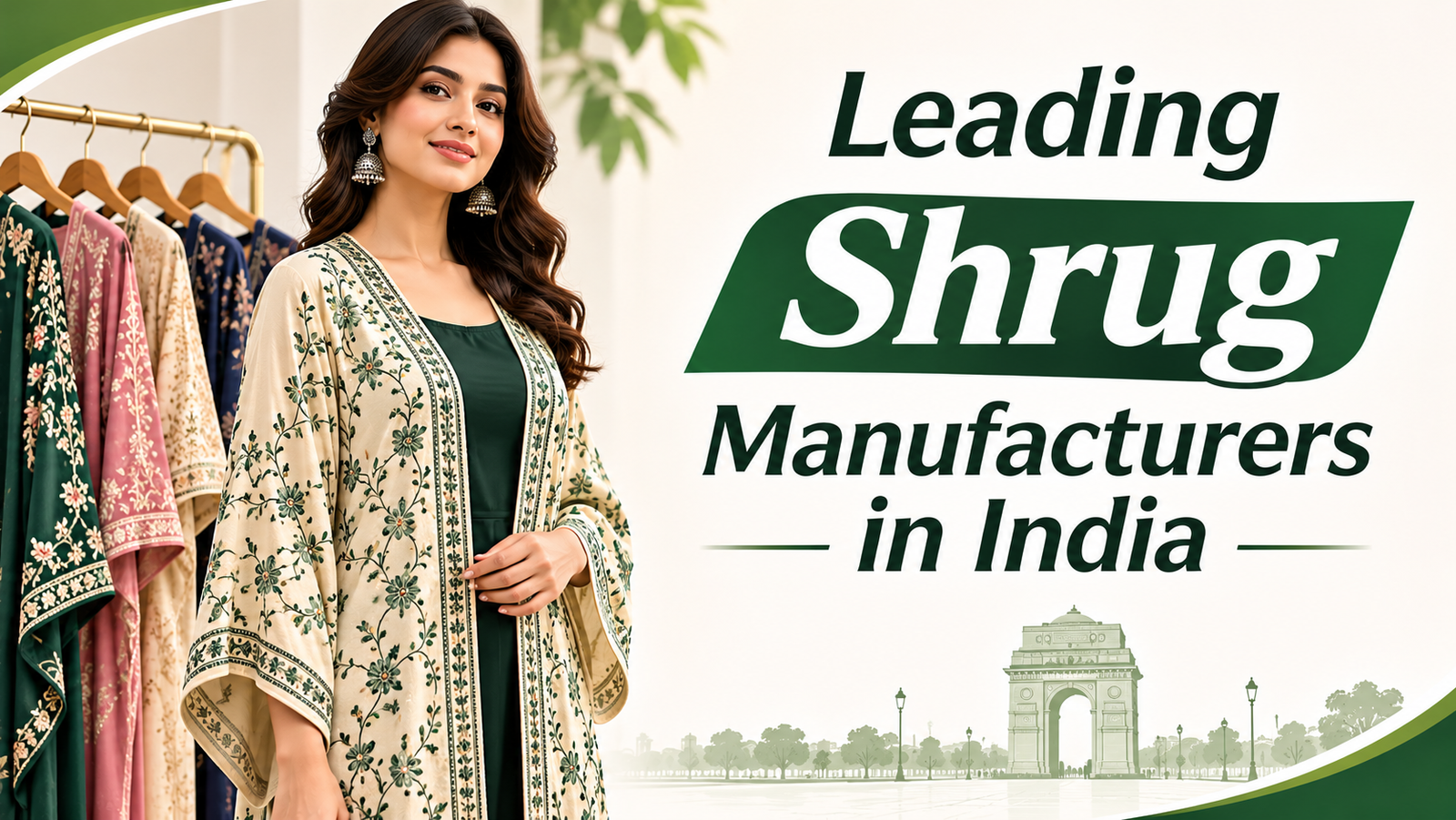
Leading Shrug Manufacturers in India are attracting the attention of international clothing wholesalers, fashion brands, and garment importers looking for versatile women's layering garments. From lightweight summer shrugs to cropped knitted styles and printed longline cover-ups, different markets require different fabrics and manufacturing techniques. For buyers sourcing from India, choosing the right manufacturer means finding a partner who understands fabric quality, fit, stitching, and the requirements of overseas customers.
A shrug may look like a simple garment, but its quality becomes clear when someone wears it. The sleeves should allow comfortable movement, the fabric should hang properly, and the finishing should look neat. A poorly selected material can stretch out of shape, feel uncomfortable, or make the garment look different from the approved sample.
India has a broad textile and garment manufacturing industry, with different regions specialising in knitted and woven clothing. Surat, Gujarat, is an established centre for printed and synthetic fabrics. Ajmera Fabrics, a division of Ajmera Fashion Limited, supplies wholesale textile materials that clothing manufacturers can evaluate for selected shrug designs and other women's wear collections.
What Is a Shrug in Women's Clothing?
A shrug is generally a short, open-front layering garment that covers the shoulders, arms, and part of the upper body. Many traditional shrug styles are knitted or crocheted, although the term is also used in fashion retail for certain woven and flowing outer layers.
Some shrugs are cropped and designed to be worn over dresses or tops. Others are lightweight, longer garments used as casual cover-ups. These styles may look similar in product photographs, but their manufacturing requirements can be quite different.
For a wholesale buyer, it is important to define the exact design before contacting a supplier. A knitted shrug requires different equipment and expertise from a cut-and-sew printed shrug.
What Makes a Reliable Shrug Manufacturer in India?
A reliable manufacturer should understand the garment's intended shape, fabric construction, sizing, and finishing. The ability to produce an attractive sample is important, but the manufacturer must also be able to maintain agreed specifications during commercial production.
For example, a cropped knitted shrug needs suitable stretch and recovery so it does not lose shape easily. A lightweight printed shrug requires proper cutting and seam finishing, while a lace shrug needs careful handling to prevent damage to decorative areas.
Buyers should review actual garment samples instead of selecting a manufacturer only from catalogue photographs. It is also important to establish who is responsible for material sourcing, stitching, inspection, and packaging.
Types of Shrugs International Buyers Source from India
Knitted Shrugs for Casual and Seasonal Wear
Knitted shrugs are often used as lightweight layering garments over tops and dresses. Depending on the yarn and knitted structure, they may offer softness, flexibility, and a comfortable fit.
For these garments, buyers should check stretch recovery, sleeve measurements, seam strength, and whether the fabric maintains its shape after washing. A knit that stretches comfortably but does not recover may become loose during regular use.
Printed Shrugs for Women's Fashion Collections
Printed shrugs are used in casual clothing and selected fashion collections. They can be worn over plain tops, dresses, or coordinated outfits, making the fabric's colour and pattern important to the finished design.
Viscose and selected polyester fabrics may work for lightweight printed styles, provided their drape and construction match the garment pattern.
Ajmera Fabrics offers a wholesale viscose fabric collection containing printed qualities. Clothing manufacturers can review these textiles when developing suitable flowing or lightweight shrug designs, subject to testing the exact fabric for the intended application.
Longline Shrugs and Lightweight Cover-Ups
Longline shrugs are often sold as fashion layers that can be worn over dresses, tunics, or casual outfits. They may use woven fabrics with a soft drape rather than the knitted construction found in traditional cropped shrugs.
For this type of garment, the fabric should move naturally and the open front should hang evenly. Buyers should also check the side seams, sleeve openings, and the way the material falls after washing.
Lace and Embroidered Shrugs for Occasion Wear
Lace and embroidered shrugs can be used in occasion-wear collections, including outfits designed to be layered over dresses.
The main quality concerns are different from those of an everyday shrug. Decorative fabrics may need careful cutting, appropriate seam allowances, and finishing that prevents embroidery or lace edges from becoming damaged.
Buyers should examine the garment from both sides to check whether the decorative work is secure and comfortable.
Best Fabrics for Shrug Manufacturing
Fabric selection should begin with the garment design rather than the fabric name. A comfortable knitted shrug may need a flexible material with good recovery, while a long printed shrug may require a softer woven fabric.
Viscose Fabric
Viscose is worth considering for selected longline and flowing shrug designs because many qualities provide a soft feel and natural-looking drape. Printed viscose can also give simple outer layers a distinctive appearance.
However, buyers should check shrinkage, fabric strength, opacity, and care requirements. Lightweight viscose should not automatically be treated as suitable for a fitted, stretch-dependent shrug.
Polyester Fabric
Polyester is available in many constructions, including woven and knitted textiles. Depending on the fabric, it can offer useful properties such as shape retention and easier care.
The fabric's weight, surface texture, breathability, and stretch must still be evaluated. A polyester print intended for dresses may behave differently from the material needed for a cropped shrug.
Cotton and Cotton-Blend Fabrics
Cotton and cotton blends can be suitable for selected casual shrug styles. Cotton-based knitted fabrics may provide softness and comfort, while woven cotton blends may work for particular structured or relaxed cover-ups.
Buyers should confirm the fabric construction and check whether the garment shrinks, twists, or loses its intended appearance after washing.
Lace and Decorative Fabrics
For occasion-wear shrugs, lace and embroidered fabrics can create a more decorative appearance. These materials require attention to transparency, seam construction, pattern placement, and finishing.
When selecting such fabrics, a garment sample is more useful than relying on photographs of the material alone.
Why Knit and Woven Shrugs Need Different Manufacturing Methods
One detail international buyers should never overlook is the difference between knitted and woven fabric.
Knitted fabrics are made from connected yarn loops and often provide more natural stretch. This can be helpful for cropped shrugs that need flexibility around the arms and shoulders.
Woven fabrics are formed from interlaced yarns and usually behave differently when stretched. They may be more suitable for selected open-front, loose-fitting shrug styles that depend on drape instead of elasticity.
A manufacturer experienced in woven garments may not necessarily have the same capabilities as a specialist knitwear factory. Buyers should therefore explain the garment construction before requesting a sample.
Shrug Manufacturers in India for USA and UK Buyers
Fashion businesses in the United States and United Kingdom may source shrugs for different clothing categories, including casual layering, occasion wear, and seasonal collections.
For a lightweight summer shrug, fabric weight and comfort may be priorities. For a knitted layering piece, stretch recovery and sizing may matter more. Occasion-wear designs can require delicate finishing and careful material handling.
Importers should confirm garment measurements, fibre composition, care labels, and applicable product requirements for the destination market. A sample approved for one market should not automatically be assumed suitable for another without reviewing those requirements.
Wholesale Shrug Sourcing for UAE and Saudi Arabia
Clothing businesses in Dubai, Abu Dhabi, Sharjah, Riyadh, Jeddah, and Dammam may look for layering garments that work with different types of dresses and coordinated outfits.
For selected modest fashion collections, a longline shrug or lightweight cover-up may provide additional styling options. The required coverage depends on the finished garment, so buyers should not rely on the product name alone.
When sourcing for Gulf markets, it is helpful to confirm fabric opacity, sleeve construction, garment length, and comfort in warm conditions.
Rather than assuming every customer wants the same design, wholesale buyers should choose styles based on their own retail audience and expected use.
What Should International Buyers Check Before Placing a Shrug Order?
The first step is to approve a garment sample made with the intended fabric. This makes it easier to examine how the shrug fits, moves, and looks when worn.
For knitted styles, buyers should check stretch recovery, sleeve fitting, and dimensional stability. For woven styles, attention should be given to seam finishing, fabric drape, and open-front balance.
Printed garments should also be checked for print placement and colour consistency. If the design includes embroidery or lace, those elements should be securely finished.
It is useful to document the approved fabric, measurements, colours, and construction details before production. This gives the manufacturer and buyer a clear reference when checking completed garments.
How Fabric Width and GSM Affect Shrug Production
GSM stands for grams per square metre and is commonly used to describe fabric weight. It helps buyers compare materials, but it does not tell the complete story of comfort, drape, or durability.
Fabric width affects cutting arrangements and material consumption. A longline shrug may use wider body panels, while a cropped shrug may require a different cutting layout.
Manufacturers should calculate fabric consumption from the actual pattern rather than assuming every shrug uses the same amount of material.
For knitwear, stretch behaviour and fabric recovery are also important because they affect garment measurements and fit.
Why Surat Is Relevant for Shrug Fabric Sourcing
Surat is an established Indian textile centre with manufacturing and trading activities in synthetic, printed, and embroidered fabrics.
For businesses developing printed shrugs or lightweight woven cover-ups, the city's textile sector provides sourcing opportunities worth evaluating.
Ajmera Fabrics works in this market with wholesale textile collections that include polyester, viscose, and decorative fabric qualities. Buyers can review these materials according to the exact garment specifications.
However, specialised knitted shrug production and finished garment stitching should be confirmed with a manufacturer offering those particular services.
Ajmera Fabrics for Wholesale Shrug Fabric Sourcing
Ajmera Fabrics operates from Surat, Gujarat, supplying fabrics to wholesale buyers and international textile businesses. Its website presents manufacturing, printing, embroidery, and export-related activities.
For clothing manufacturers developing shrug collections, the company provides textile options that may be suitable for selected printed or flowing outer-layer designs.
A buyer should begin by sharing the intended garment pattern, preferred composition, usable width, weight, and finishing requirements.
The available material can then be evaluated through samples before being approved for garment production. For knitted shrugs or ready-made stitched garments, the buyer should separately confirm the required manufacturing capabilities.
How to Source Shrug Fabrics from India
If you are an international clothing wholesaler, fashion brand, or garment manufacturer, begin with a clear description of the shrug you want to produce.
Explain whether you need a cropped knitted shrug, a long printed cover-up, or an embroidered occasion style. Include the required fabric construction, composition, colour, weight, width, and finishing details.
A reference garment or sample can help the textile supplier understand your design requirements more accurately.
Businesses sourcing suitable fabrics can contact Ajmera Fabrics through its wholesale fabric enquiry page to discuss available textile qualities and international supply arrangements.
Conclusion: Choosing Leading Shrug Manufacturers in India
Choosing a shrug manufacturer involves understanding the difference between a good-looking design and a garment that performs well after stitching and regular wear.
Knitted shrugs need appropriate stretch and shape recovery, while woven and printed shrug styles depend more on fabric drape, cutting, and finishing. Buyers should evaluate these differences before selecting a manufacturing partner.
For international businesses researching Leading Shrug Manufacturers in India, a suitable garment producer and reliable fabric sourcing arrangement are both important.
Ajmera Fabrics offers wholesale fabric sourcing options for selected shrug and women's wear applications, with material specifications and availability to be confirmed before purchasing.
Frequently Asked Questions
Who are the leading shrug manufacturers in India?
Leading manufacturers should be assessed according to their experience with the required shrug style, sample quality, garment construction, fabric sourcing, and export arrangements. Buyers should verify the capabilities of individual factories rather than relying on unsupported rankings.
Which fabric is best for shrug manufacturing?
It depends on the design. Knitted fabrics are often suitable for cropped, stretch-dependent shrugs, while selected viscose and polyester fabrics may be appropriate for lightweight woven or printed cover-ups.
Can international buyers source shrug fabrics from Surat?
Yes. Surat has textile suppliers offering printed, synthetic, and decorative fabrics. Buyers should check whether each material meets the technical requirements of the intended shrug design.
What is the difference between a knitted shrug and a woven shrug?
Knitted shrugs often have greater natural stretch and may use cardigan-style construction. Woven shrugs generally depend on garment cutting and fabric drape, with properties varying according to the selected material.
Does Ajmera Fabrics manufacture ready-made shrugs?
Ajmera Fabrics primarily presents itself as a wholesale textile manufacturer and supplier. Buyers can enquire about appropriate fabrics, but finished shrug manufacturing should be confirmed separately.
What should USA and UK importers check when sourcing shrugs?
Importers should review the approved sample, fabric composition, sizing, stitching, colour consistency, care information, labelling requirements, and applicable shipping arrangements.