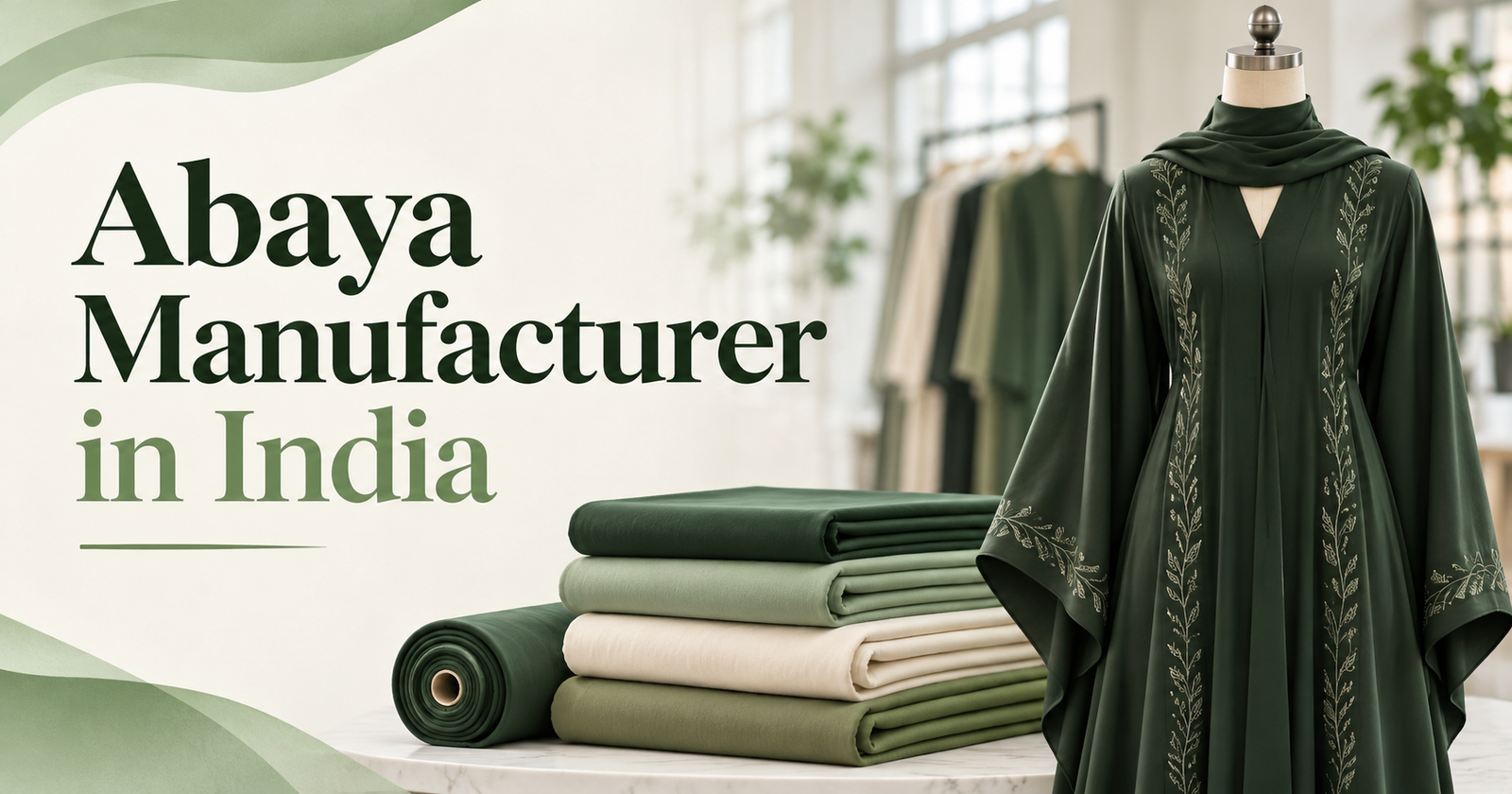
Abaya Manufacturer in India is a search that matters to clothing wholesalers, modest fashion brands, and importers looking for a reliable source of abayas for their business. Whether a buyer supplies boutiques in Dubai, stores in Riyadh, or modest fashion retailers in the UK, the basic requirements remain important: comfortable fabric, proper coverage, good stitching, and a finished garment that matches the approved sample.
One thing experienced clothing buyers understand is that an abaya can look beautiful in a photograph but feel completely different when worn. The material may be too heavy, the sleeves may not fall correctly, or the fabric may lose its original appearance after washing. These details affect customer satisfaction and repeat sales.
India has a large textile and garment industry, with Surat being an important centre for fabric sourcing, printing, embroidery, and textile processing. Based in Surat, Ajmera Fabrics works in wholesale fabric supply and exports, offering textile sourcing options for businesses developing abayas and other modest fashion collections.
What Should Buyers Expect from an Abaya Manufacturer in India?
A dependable abaya manufacturer should understand the complete garment, not simply the stitching process. Different abaya designs require different fabric properties, cutting patterns, sleeve constructions, and finishing techniques.
For example, a closed everyday abaya needs a comfortable fit and suitable coverage. An open abaya may require fabric that falls smoothly over an inner dress. A butterfly abaya needs additional width around the sleeves, while an embroidered occasion abaya requires careful placement of decorative work.
Before choosing a manufacturer, wholesale buyers should review a finished garment sample. This allows them to check the stitching, measurements, fabric movement, transparency, and overall appearance.
The company manufacturing the finished abaya and the company supplying its fabric may be different businesses. Buyers should understand these responsibilities before approving production.
Why India Is a Fabric Sourcing Destination for Abaya Businesses
India produces a wide variety of textiles used in clothing manufacturing. Its textile industry includes synthetic fabrics, viscose materials, printed textiles, and embroidered fabrics, alongside other fibre and fabric categories.
Surat is particularly known for synthetic textiles, printing, embroidery, and related processing activities. This makes it a useful sourcing location for garment manufacturers looking to compare different fabric qualities.
However, not every fabric made in Surat is suitable for abayas. The material must be selected according to the garment's intended use, required coverage, movement, and care instructions.
A textile supplier with clear product specifications can help a clothing business evaluate appropriate materials before a garment manufacturer begins cutting and stitching.
Which Fabric Is Best for Abaya Manufacturing?
There is no single fabric that works for every abaya. Daily-wear collections, premium occasion wear, open abayas, and butterfly styles may require different materials.
Nida Fabric for Everyday Abayas
Nida is a familiar fabric name in the Gulf abaya market. Many varieties are valued for their soft feel, matte appearance, and flowing finish.
However, Nida is a commercial fabric name rather than one fixed technical specification. Different suppliers may offer materials with different compositions, weights, and finishing under the same name.
Buyers should therefore check the fabric's actual composition, opacity, weight, colour consistency, and washing performance rather than selecting it by name alone.
The availability of a particular Nida quality should also be confirmed with the chosen textile supplier before ordering.
Crepe Fabric for Modern Abaya Designs
Selected crepe fabrics are suitable for abayas that need a controlled yet flowing shape. Crepe can work for everyday garments, open abayas, and some contemporary modest wear designs.
But crepe varies significantly in texture and weight. Some varieties are soft and lightweight, while others are firmer or more textured.
For a black everyday abaya, buyers should examine opacity, drape, crease behaviour, and how the material feels during movement.
Polyester Fabrics for Abaya Production
Polyester is used in many clothing categories because different constructions can provide useful properties such as shape retention, easy care, and resistance to creasing.
However, fibre content alone does not determine whether a fabric will work for an abaya. The weave, weight, finish, breathability, and transparency also matter.
Ajmera Fabrics offers a wholesale polyester fabric collection that international buyers can explore. Any fabric selected for abaya production should first be assessed for the specific garment style, as a polyester fabric designed for another clothing category may not be appropriate.
Chiffon Fabric for Layered Abayas
Chiffon is often used for decorative outer layers, flowing sleeves, and selected occasion-wear abayas.
Its lightweight appearance works well in designs that require movement, but chiffon is generally transparent and may need a lining or separate inner garment.
Manufacturers should check the weight of both layers and how they behave together. A heavy lining may change the movement of the outer fabric, while an unsuitable combination can create pulling around the seams.
Satin and Embroidered Fabrics for Occasion Abayas
Selected satin fabrics can suit evening and festive abayas that need a smooth or slightly lustrous appearance. Embroidered textiles can also be useful for sleeves, front panels, and decorative garment sections.
For these designs, buyers should check seam appearance, embroidery stability, fabric weight, and comfort.
A richly decorated material may look attractive in a catalogue but become uncomfortable if the embroidery is too heavy or rough against the body.
Black Abaya Fabric: What Gulf Buyers Should Check
For many abaya collections, black is a core colour. Yet not every black fabric has the same depth or appearance.
Some materials have a soft matte finish, while others appear shiny under bright lighting. Two fabrics may look similar indoors but show different undertones in daylight.
For wholesale abaya production, buyers should approve a physical black shade sample rather than relying entirely on digital photographs.
It is also useful to test colourfastness according to the fabric's intended care method. When the same design is produced again, the approved shade can serve as a reference for evaluating future fabric deliveries.
These checks are particularly valuable for brands selling matching abayas and coordinated modest wear collections.
Abaya Manufacturing for UAE Wholesale Buyers
The UAE has a diverse modest fashion market, with boutiques, garment businesses, and clothing wholesalers serving different customer groups.
In Dubai, some buyers look for contemporary open abayas, elegant occasion pieces, or butterfly-style designs. Others focus on simple daily-wear garments with comfortable materials and practical finishing.
Businesses supplying shops in Abu Dhabi, Sharjah, and Ajman may also have their own requirements for fabric weight, sizing, colours, and decorative details.
Rather than assuming every UAE customer wants the same style, importers should review their own sales patterns and customer feedback before confirming a collection.
For garment production, it helps to share a clear reference sample showing the required length, sleeves, neckline, front opening, and finishing.
Abaya Wholesale Manufacturing for Saudi Arabia
Saudi Arabia is an important market for modest clothing, with garment traders and retailers operating across Riyadh, Jeddah, Dammam, and other cities.
Buyers may source traditional closed abayas, open-front designs, or more decorative garments for festive collections.
Fabric comfort, coverage, black shade, and garment construction can all influence the finished product.
For businesses importing abayas into Saudi Arabia, it is important to confirm the required product information, labelling, and applicable import requirements before shipment.
These details should be discussed alongside the garment's design and quality specifications.
Abaya Production for Kuwait, Qatar, Oman and Bahrain
Wholesale buyers in Kuwait, Qatar, Oman, and Bahrain may require different collections depending on the boutiques and clothing businesses they serve.
A retailer selling occasion wear might need embroidery and premium finishing, while another business may prefer simple garments intended for regular use.
Manufacturers should not assume that a fabric or garment style will perform equally well in every Gulf market.
It is more useful to understand the buyer's target customer, garment construction, preferred colour range, and fabric requirements before selecting materials.
How to Check Abaya Stitching and Finishing Quality
Fabric is an important part of an abaya, but garment construction determines how it looks after stitching.
Wholesale buyers should pay attention to shoulder balance, sleeve attachment, hem finishing, and seam consistency. The garment should be comfortable when the wearer walks, sits, or raises her arms.
For open abayas, buyers should also check the front edges and whether the garment hangs evenly. For closed abayas, the neckline and overall fit deserve careful attention.
If the design includes embroidery, decorative stones, or additional panels, these elements should be securely attached and should not interfere with movement or comfort.
Reviewing a complete sample before production gives buyers a better understanding of the garment than fabric photographs alone.
How Fabric Width Affects Abaya Production Cost
When choosing fabric for abayas, width is an important technical detail.
A wider fabric may allow certain garment patterns to be cut more efficiently, while a narrower material may require additional panels or a different cutting arrangement.
The result depends on the abaya design, size range, sleeve shape, and usable width after finishing.
For this reason, a garment manufacturer should calculate actual fabric consumption from the approved pattern instead of comparing only the price per metre.
This is especially relevant for butterfly abayas, oversized designs, and other garments with wider silhouettes.
What International Buyers Should Confirm Before Abaya Production
Before approving a manufacturer, buyers should be clear about the garment they want to sell.
Important details include the type of abaya, fabric composition, preferred weight, usable width, colour, sizing, sleeve design, and finishing.
For embroidered or layered garments, the manufacturer should also understand which material will be used for each part of the design.
A physical sample helps confirm the required look and feel. Buyers may also need fabric performance tests, depending on the final garment and the market where it will be sold.
When fabric sourcing and garment stitching are handled by different companies, the responsibilities should be established clearly so that both parties work from the same approved specifications.
Ajmera Fabrics for Abaya Fabric Sourcing from India
Ajmera Fabrics operates from Surat, Gujarat, supplying textiles to wholesale and international buyers. Its business focuses on fabric sourcing and supply, with activities connected to textile manufacturing, printing, embroidery, and finishing.
For abaya brands and garment manufacturers, the starting point is to identify the exact fabric required for the finished design.
A business developing everyday abayas may need a soft, opaque material with controlled drape. Another business producing embroidered occasion abayas may require a decorative textile for selected garment sections.
Ajmera's fabric collections can be evaluated against these requirements, but the availability of specialised abaya fabrics such as particular Nida or crepe qualities should be confirmed directly.
Buyers seeking finished stitched abayas should also verify the garment manufacturing service separately, since Ajmera Fabrics primarily presents itself as a textile sourcing and wholesale fabric business.
How to Enquire About Wholesale Abaya Fabrics in India
If you are a clothing importer, abaya wholesaler, or modest fashion brand, begin by preparing a clear description of the garment you want to produce.
Share the preferred fabric composition, weight, width, colour, finish, and intended use. A fabric sample or reference garment can also help explain the required drape and coverage.
If the design includes embroidery or layered materials, describe how those fabrics will be used in the finished product.
International buyers can contact Ajmera Fabrics through its wholesale fabric enquiry page to discuss available textile qualities, specifications, and export arrangements.
Choosing the Right Abaya Manufacturer in India
Finding an appropriate abaya manufacturing partner requires more than comparing garment photographs or asking for a price.
The finished abaya should meet the buyer's expectations for fit, coverage, fabric comfort, stitching, and appearance. A reliable fabric sourcing arrangement is equally important because different textiles can change how the same pattern looks and feels.
India offers opportunities for garment sourcing and textile supply, particularly for businesses willing to evaluate samples and confirm specifications carefully.
For buyers searching for an Abaya Manufacturer in India, choosing a capable garment producer and suitable fabrics can help create collections that meet the needs of international modest fashion customers.
Ajmera Fabrics provides a wholesale textile sourcing option for businesses exploring abaya production, with fabric availability and technical specifications to be confirmed for each requirement.
Frequently Asked Questions About Abaya Manufacturing in India
Can I find an abaya manufacturer in India for wholesale buying?
Yes. India has garment manufacturers and textile suppliers serving different clothing categories. Buyers should confirm finished abaya production capabilities, sample quality, fabric specifications, and export arrangements before selecting a manufacturer.
Which fabric is best for abaya manufacturing?
It depends on the design. Selected Nida and crepe fabrics may suit everyday abayas, while chiffon can work for layered designs and satin or embroidered fabrics may be suitable for occasion wear.
Can abaya fabrics be sourced from Surat, India?
Yes. Surat is an established textile centre with synthetic, printed, and embroidered fabrics. Buyers should confirm whether a particular textile quality meets their abaya manufacturing requirements.
What should UAE importers check before purchasing abayas from India?
Buyers should review garment samples, fabric quality, sizing, stitching, opacity, colour consistency, finishing, shipping terms, and applicable import requirements.
Does Ajmera Fabrics manufacture ready-made abayas?
Ajmera Fabrics primarily focuses on wholesale fabric sourcing and supply. Buyers can enquire about suitable textiles for abaya production, but finished abaya garment manufacturing should be confirmed separately.
How do I choose black fabric for abaya manufacturing?
Check the physical shade, opacity, drape, composition, weight, and colourfastness. A fabric sample should be approved before it is used in a finished garment collection.
How can I enquire about wholesale abaya fabrics from India?
Share the required fabric type, composition, weight, width, colour, finish, and garment application through the Ajmera Fabrics enquiry page to discuss available options.