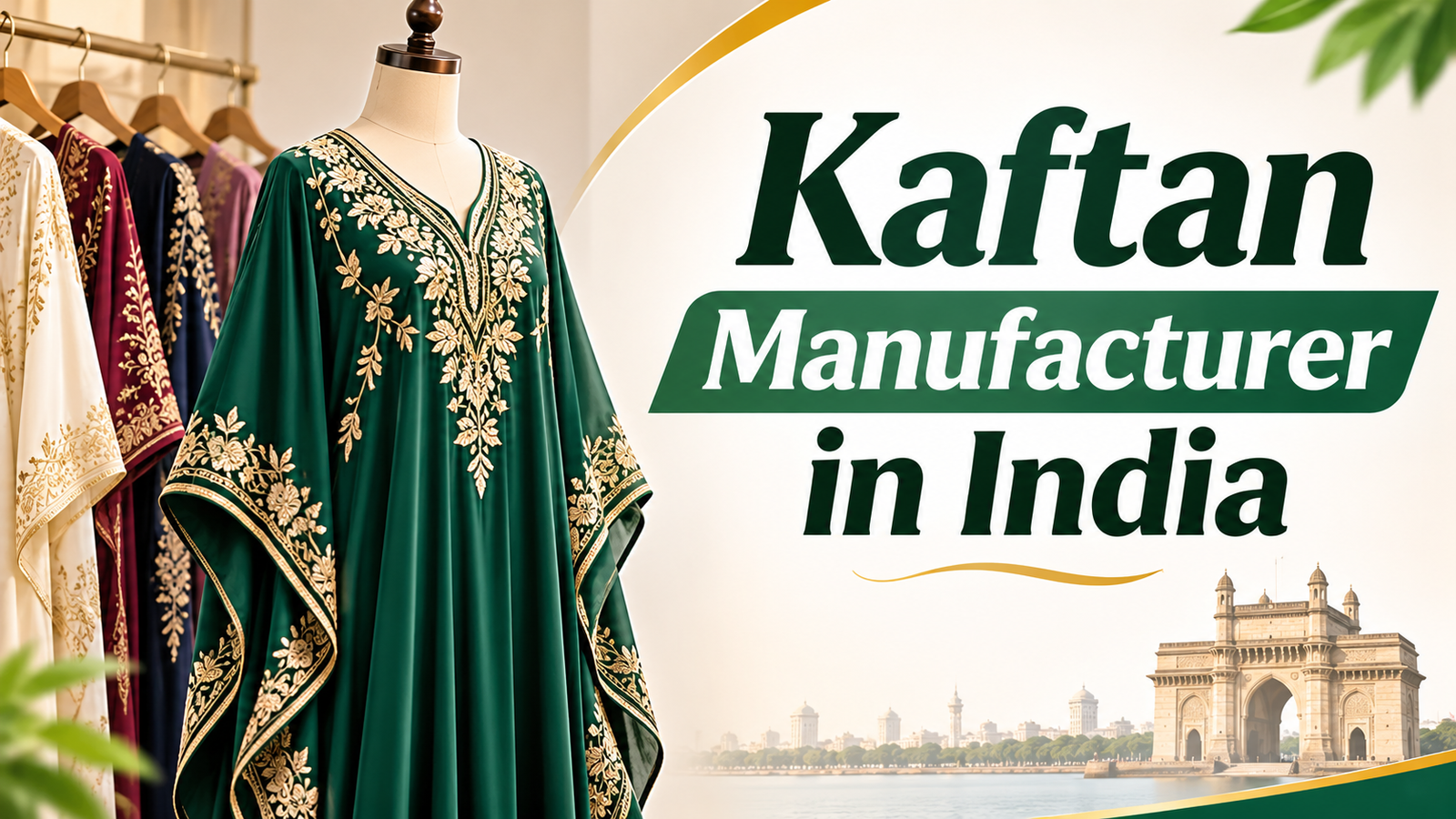
Best Kaftan Manufacturer in India is a search often made by clothing wholesalers, modest fashion brands, boutique owners, and international buyers looking for kaftan dresses and reliable manufacturing partners. Whether the collection is intended for boutiques in Dubai, fashion stores in Saudi Arabia, or resortwear retailers in the UK and USA, buyers need more than attractive designs. Fabric quality, comfortable fitting, clean stitching, and the right finish determine how a kaftan looks and feels after it is made.
Kaftans may look simple because of their loose shape, but producing a well-finished kaftan requires careful fabric selection. A material that feels soft in the hand may become too transparent when worn, while a beautiful printed fabric may not fall properly after cutting. For wholesale buyers, these details affect customer satisfaction and repeat purchases.
India offers different options for garment manufacturing and textile sourcing. Surat, Gujarat, is known for its fabric manufacturing, printing, and embroidery industry. Based in Surat, Ajmera Fabrics, a division of Ajmera Fashion Limited, supplies wholesale textiles that clothing manufacturers and international fashion businesses can evaluate for kaftan collections.
What Is a Kaftan and Why Does Fabric Matter?
A kaftan is a loose-fitting garment that can be designed as a long dress, a relaxed tunic, or an occasion-wear outfit. It may have wide sleeves, side openings, embroidery, or decorative prints, depending on the style.
Unlike a fitted dress, a kaftan usually depends on the natural movement of the fabric to create its shape. This makes fabric drape especially important.
For example, a soft viscose fabric may create gentle folds around the body, while a stiffer material can give the garment a more structured appearance. Neither is automatically better. The right choice depends on the design and the customer who will wear it.
A good kaftan manufacturer should understand how the selected fabric behaves after cutting, stitching, washing, and pressing.
What Makes a Good Kaftan Manufacturer in India?
Finding a suitable kaftan manufacturer requires more than comparing catalogue photographs. A wholesale buyer should evaluate whether the manufacturer understands garment patterns, fabric properties, sizing, and finishing.
A well-made kaftan should hang evenly, allow comfortable movement, and maintain its intended shape. Neckline finishing should be neat, sleeves should feel balanced, and embroidery should not pull or distort the fabric.
For printed kaftans, the manufacturer should also consider the placement and direction of the print. A large design that looks attractive on an uncut fabric roll may appear uneven once the garment is stitched.
Before confirming production, buyers should examine a complete kaftan sample made with the actual fabric intended for the collection.
Best Fabrics for Kaftan Manufacturing
There is no single best fabric for every kaftan. A comfortable everyday kaftan, a beach cover-up, and an embroidered festive kaftan require different materials.
Viscose Fabric for Printed Kaftan Dresses
Viscose is worth considering for kaftan designs that need a soft feel and flowing appearance. It is often used in dresses, tunics, and relaxed garments because many viscose qualities drape comfortably.
Printed viscose can be especially useful for casual kaftan collections where the fabric design is an important part of the garment.
However, buyers should check the fabric's weight, opacity, shrinkage, and care requirements before approving it for production.
Ajmera Fabrics offers wholesale viscose fabrics, including printed qualities that can be evaluated for suitable kaftan applications. Fabric availability and individual specifications should be reviewed before sourcing.
Crepe Fabric for Modest and Everyday Kaftans
Selected crepe fabrics are suitable for kaftan designs that need a flowing appearance with some control over the garment's shape.
Crepe is not one fixed material. Different qualities may use polyester, viscose, silk, or blended fibres. Their weight, texture, opacity, and behaviour after washing can vary considerably.
For modest fashion collections in the Gulf, buyers may prefer a crepe fabric that provides suitable coverage without making the kaftan unnecessarily heavy.
It is important to test the material on a finished sample instead of selecting it only by its commercial fabric name.
Chiffon Fabric for Layered Kaftans
Chiffon can create a light, floating appearance, which makes it suitable for selected occasion-wear and layered kaftan designs.
Because chiffon is often transparent, manufacturers may need to use an inner dress or lining. The lining should provide suitable coverage without affecting the movement of the outer layer.
Chiffon can also require careful handling during stitching because its lightweight construction may make it more difficult to cut and sew consistently.
Cotton and Cotton Blends for Casual Kaftans
Cotton and selected cotton blends can work well for relaxed daily-wear kaftans, particularly when comfort and moisture absorption are important.
However, the softness and drape of cotton depend on the fabric's weave, yarn, and finishing. Some cotton qualities are light and flexible, while others have a firmer structure.
Buyers should also test shrinkage and check how the fabric looks after washing, especially for clothing intended for regular use.
Satin and Embroidered Fabrics for Premium Kaftans
Selected satin fabrics may be suitable for evening kaftans and festive collections where buyers want a smooth finish and a more dressed-up appearance.
Embroidered fabrics can be used for decorative panels, sleeves, necklines, or particular kaftan designs.
For these materials, it is important to check fabric weight, embroidery placement, stitch strength, and the comfort of the finished garment.
Heavy decorative work may affect the way a loose kaftan hangs. That is why sample development is especially useful when the design includes embroidery.
How Fabric Weight and Width Affect Kaftan Production
Two fabrics can have a similar appearance while behaving differently during manufacturing.
Fabric weight is commonly measured in GSM, meaning grams per square metre. This helps buyers compare the weight of different textile qualities, but it does not determine softness or opacity on its own.
Fabric width is equally important. Kaftans often use broad garment panels, and a narrower fabric may require additional seams or a different cutting arrangement.
For example, Ajmera Fabrics lists its Daisy Printed Viscose quality as 100% viscose, 72 GSM, and 44 inches wide. These specifications give garment manufacturers useful information for evaluating fabric weight and planning a sample pattern.
However, the suitability of any individual fabric depends on the actual kaftan design, sizing, required coverage, and cutting layout.
Printed Kaftan Manufacturing: Why Print Placement Matters
Print selection plays an important role in many kaftan collections, especially when the garment has a relaxed shape and a large visible fabric surface.
Large floral prints, geometric patterns, and border designs may create different results after stitching.
For instance, a kaftan with a central front design needs careful print positioning. If the pattern is cut without planning, the motif may sit too high, too low, or away from the centre.
Border prints require similar attention. The manufacturer should consider where the design will appear around the hem, sleeves, and side panels.
Buyers should therefore examine a finished garment sample, not just a photograph of the printed fabric.
Kaftan Manufacturing for UAE Wholesale Buyers
The UAE offers different opportunities for kaftan collections, from modest everyday clothing to festive and occasion wear.
In Dubai, fashion wholesalers may source kaftans for boutiques, clothing shops, and online sellers. Other businesses may focus on jalabiya-inspired styles or embroidered kaftans for festive collections.
Buyers supplying Sharjah, Abu Dhabi, or Ajman may have different requirements depending on the customers they serve.
For UAE wholesale buyers, the important questions are practical. Does the fabric provide the required coverage? Is the garment comfortable in warm weather? Does the print look attractive after cutting? Can the chosen material be cleaned according to the intended care instructions?
Answering these questions before production helps buyers select more appropriate fabric and garment combinations.
Kaftan Wholesale Sourcing for Saudi Arabia and the Gulf
Saudi Arabia, Qatar, Kuwait, Oman, and Bahrain are also relevant markets for modest fashion and occasion-wear kaftan collections.
Buyers in Riyadh, Jeddah, Dammam, Doha, Kuwait City, and Muscat may source different styles according to their customers and retail positioning.
Some collections may feature simple, comfortable kaftans for regular use. Others may include embroidery, flowing sleeves, decorative details, or coordinated inner garments.
Rather than assuming that all Gulf buyers prefer the same materials, manufacturers should confirm the intended use, preferred garment construction, and fabric requirements for each collection.
This is particularly important for Ramadan and Eid collections, where a boutique may plan its designs and purchasing schedule around a specific sales season.
Kaftan Manufacturers for UK and USA Clothing Businesses
Kaftans are not limited to traditional or modest clothing collections. They are also found in resortwear, beachwear, holiday collections, and relaxed fashion ranges.
For clothing businesses in the UK and USA, fabric selection may depend on whether the kaftan is designed as a beach cover-up, a casual dress, or a premium occasion garment.
A lightweight, semi-transparent fabric may be appropriate for a beach cover-up, while a dress intended for everyday wear may need more coverage.
Buyers should confirm garment measurements, care instructions, fabric composition, and applicable product labelling requirements for their market.
How to Check Kaftan Quality Before Wholesale Purchasing
A good kaftan sample should be checked both on a hanger and when worn.
The shoulder and neckline should sit properly, the sleeves should allow easy movement, and the fabric should fall evenly without unnecessary pulling.
Buyers should check whether the garment twists after washing, whether the print remains aligned, and whether the stitching and finishing are neat.
For embroidered kaftans, the decorative work should lie properly on the material and should not make the garment uncomfortable.
When sourcing fabric separately from a garment manufacturer, both companies should work from the same approved material specifications.
Why Surat Is a Useful Textile Sourcing Centre for Kaftans
Surat is an established Indian textile centre known for synthetic fabrics, printed textiles, embroidery, and processing activities.
For kaftan clothing brands, sourcing from Surat can provide access to fabric collections that may be evaluated for casualwear, printed garments, and occasion wear.
Ajmera Fabrics operates within this textile industry, supplying wholesale fabrics to clothing manufacturers, distributors, and international buyers.
Its available collections include polyester, viscose, and decorative textile qualities. Buyers should check the exact specifications and suitability of each fabric before selecting it for kaftan production.
Ajmera Fabrics for Wholesale Kaftan Fabric Sourcing
Ajmera Fabrics focuses on textile manufacturing, fabric supply, printing, embroidery, and export-related services from Surat, India.
For a kaftan brand, the sourcing process should begin with the type of garment being developed. A printed casual kaftan may need a different material from an embroidered festive kaftan or a lightweight resortwear design.
Buyers can discuss fabric composition, weight, width, print requirements, and finishing with the sourcing team to identify suitable available textile qualities.
It is important to distinguish fabric supply from finished garment manufacturing. Businesses requiring ready-made stitched kaftans should independently confirm the garment manufacturer's stitching and production capabilities.
How to Enquire About Kaftan Fabrics from India
If you are a fashion wholesaler, kaftan brand, garment manufacturer, or international textile importer, prepare a clear description of your fabric requirements before making an enquiry.
Share the intended kaftan style, fabric type, preferred composition, weight, usable width, colour, print, and finishing requirements.
If possible, provide a reference sample or garment photograph showing the desired drape and design.
International buyers can submit their requirements through the Ajmera Fabrics wholesale enquiry page to discuss available textile qualities and commercial sourcing arrangements.
Conclusion: Choosing the Best Kaftan Manufacturer in India
The right kaftan manufacturing partner should understand how fabric, garment construction, and finishing work together.
A good design needs a material that supports its intended shape. Printed kaftans require careful pattern placement, embroidered kaftans need appropriate decorative finishing, and everyday styles should provide comfort and practical care.
For wholesale buyers searching for the Best Kaftan Manufacturer in India, it is worth evaluating the garment maker's sample quality as well as the textile sourcing process.
Ajmera Fabrics provides a fabric sourcing option for businesses developing kaftan collections, with available materials and specifications to be confirmed according to the intended garment.
Frequently Asked Questions
Who is the best kaftan manufacturer in India?
The best choice depends on the garment style, fabric requirements, stitching quality, sample approval process, and buyer's target market. Businesses should compare actual manufacturing capabilities rather than relying only on promotional rankings.
Which fabric is best for kaftan dresses?
Selected viscose and crepe fabrics can suit flowing everyday kaftans, cotton may work for casual styles, and chiffon or satin can be considered for certain layered or occasion-wear designs.
Can I source kaftan fabrics from Surat, India?
Yes. Surat is known for wholesale textiles, including printed, synthetic, and embroidered fabrics. Buyers should confirm the fabric composition, weight, width, and suitability for their kaftan design.
What should UAE buyers check before purchasing kaftans from India?
Buyers should review the garment sample, fabric quality, measurements, print placement, stitching, opacity, care requirements, and commercial shipping terms before confirming production.
Does Ajmera Fabrics manufacture ready-made kaftans?
Ajmera Fabrics primarily presents itself as a wholesale textile manufacturer and fabric supplier. Buyers can enquire about suitable textiles, but finished kaftan garment manufacturing should be confirmed separately.
Can printed viscose be used for kaftan manufacturing?
Yes, selected printed viscose fabrics may suit kaftan styles that need a soft drape. Buyers should confirm opacity, shrinkage, fabric width, and the finished garment's intended use.
How can international buyers enquire about kaftan fabrics?
Buyers can share their preferred fabric type, composition, weight, width, design, and destination country through Ajmera Fabrics' wholesale enquiry page to discuss sourcing options.