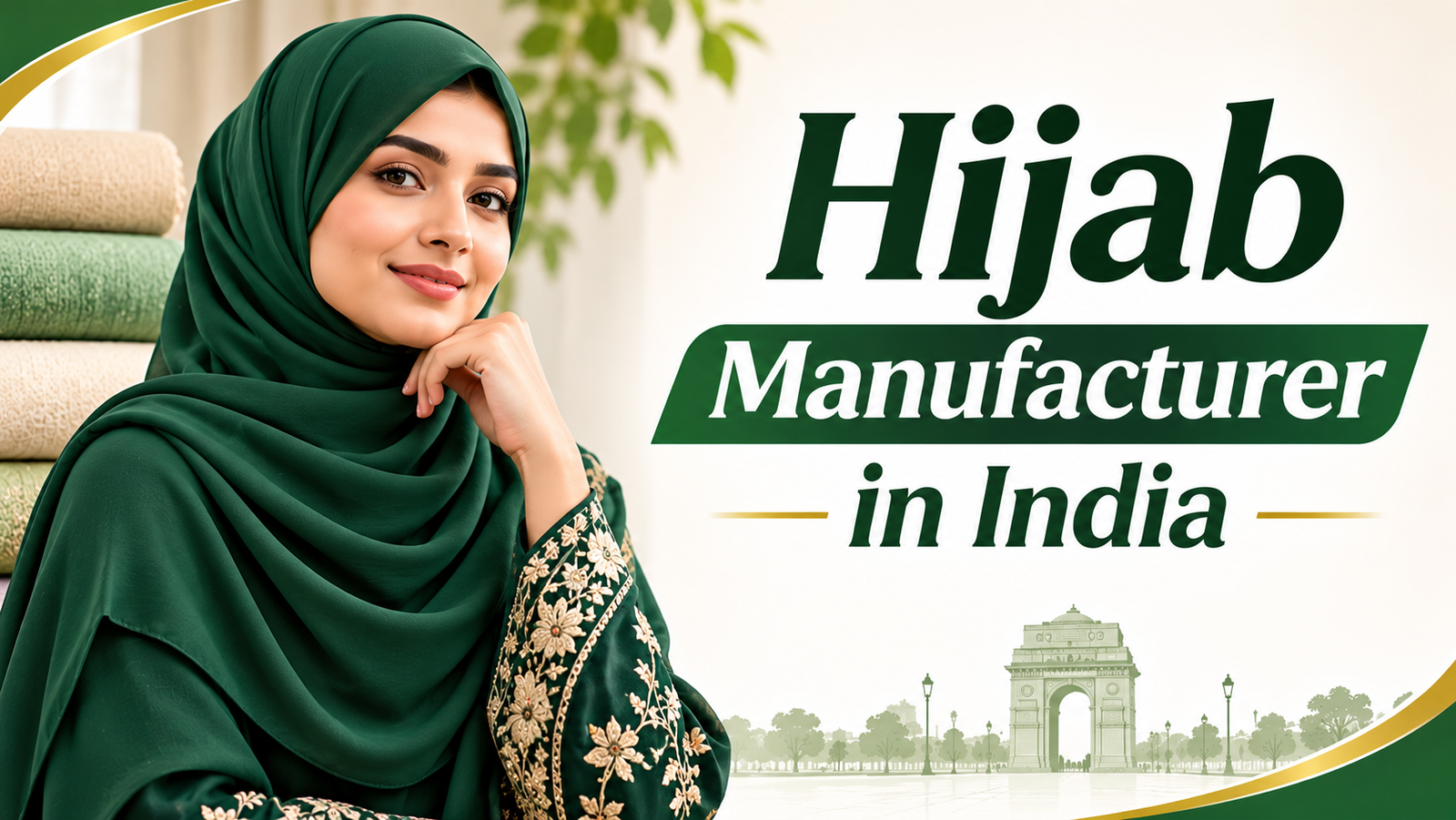
Best Hijab Manufacturer in India is a search made by modest fashion brands, clothing wholesalers, scarf retailers and international importers looking for quality hijabs at wholesale prices. Whether a business supplies shops in Dubai, boutiques in Riyadh or online modest fashion stores in the UK, finding the right manufacturing partner involves more than comparing colours and designs. Fabric comfort, coverage, drape, stitching and finishing determine whether customers will want to buy the same hijab again.
A hijab that looks attractive in a catalogue can behave differently when worn. Some fabrics slip easily, while others hold their shape without much adjustment. A lightweight scarf may feel comfortable in warm weather but become transparent under bright light. For businesses selling hijabs, understanding these differences helps them choose products that match their customers' needs.
India has an established textile industry with manufacturers supplying fabrics for scarves, apparel and other clothing categories. Surat, Gujarat, is particularly known for synthetic textiles, printed fabrics and embroidery. Based in Surat, Ajmera Fabrics manufactures and supplies wholesale textiles that hijab manufacturers and modest fashion businesses can evaluate for suitable scarf applications.
What Should Buyers Look for in a Hijab Manufacturer in India?
A reliable hijab manufacturer should understand the difference between a fashionable scarf and a comfortable product designed for regular wear.
The manufacturer should be able to explain the fabric composition, construction, weight and finishing. These details matter because different hijab styles require different materials.
For example, a jersey hijab usually needs stretch and recovery, while a chiffon hijab depends more on drape and lightweight construction. A printed square hijab may require careful cutting to keep the design centred.
Wholesale buyers should request a finished sample and inspect how it feels, wraps and stays in place. They should also confirm whether the supplier manufactures finished hijabs or supplies fabric for another garment factory to cut and finish.
Which Fabrics Are Best for Hijab Manufacturing?
There is no single fabric that works for every hijab. The right material depends on the intended style, customer preferences and climate.
Chiffon Fabric for Lightweight Hijabs
Chiffon is commonly used in flowing hijabs because of its lightweight appearance and soft movement. It is particularly relevant to occasion-wear collections and styles designed to create elegant folds.
However, many chiffon fabrics are semi-transparent and can slip against the hair. Customers may prefer to wear an undercap or use a suitable fastening method.
For wholesale manufacturing, buyers should check the fabric's transparency, seam quality, edge finishing and behaviour after washing. Different chiffon constructions can perform differently, even when sold under the same name.
Jersey Fabric for Everyday and Instant Hijabs
Jersey is a knitted fabric often chosen for hijabs that need stretch and a secure fit. Certain jersey qualities can be comfortable for everyday wear because they follow the shape of the head without requiring complicated wrapping.
Jersey is also relevant to instant and pull-on hijab designs, where stretch recovery is important for maintaining the garment's fit.
Buyers should check whether the fabric returns to its original shape after stretching. An unsuitable jersey may become loose after repeated use, while an excessively heavy knit may feel uncomfortable in hot weather.
Viscose Fabric for Soft and Flowing Hijabs
Viscose is worth considering for scarves and hijabs that need a soft feel and fluid drape. Selected viscose qualities can be used for comfortable wraps and printed scarf collections.
Its performance depends on the actual fabric construction. Some viscose fabrics are light and semi-transparent, while others provide greater coverage. Shrinkage, colourfastness and care requirements should be checked before selecting a material.
Ajmera Fabrics offers a wholesale viscose fabric collection that includes printed textile qualities. Hijab and scarf manufacturers can examine these materials when sourcing suitable fabrics, but each product should be tested for the intended scarf design before approval.
Modal Fabric for Premium Everyday Hijabs
Modal is a regenerated cellulosic fibre used in selected soft, draping scarf fabrics. Certain modal fabrics are popular in everyday hijab collections because of their smooth feel and comfortable appearance.
However, the word modal does not guarantee a particular level of coverage or durability. Fabric weight, weave or knit structure, composition and finishing still determine how the material performs.
Buyers should confirm the fibre composition and review a physical sample rather than relying only on a commercial fabric name.
Cotton Fabric for Casual Hijab Collections
Cotton and selected cotton blends can suit casual hijabs, especially when buyers want a natural fabric feel and moisture absorption.
Different cotton constructions offer different levels of softness, coverage and drape. Lightweight cotton voile, for example, may require careful consideration of transparency.
Manufacturers should also check shrinkage and colour consistency, particularly when producing collections in multiple shades.
Satin and Decorative Fabrics for Occasion Hijabs
Selected satin fabrics can provide a smooth, polished appearance for festive and occasion-wear hijabs. Decorative textiles may also be used in scarves designed for special collections.
Because smooth satin can be slippery, buyers should test how the material stays in place during normal wear. Edge finishing and fabric care also require attention.
For embellished scarves, decorative work should not create uncomfortable or rough areas near the head and neck.
Why Fabric Opacity Matters in Hijab Manufacturing
Opacity is one of the practical details that can influence customer satisfaction.
A fabric may look opaque when folded but become transparent when held as a single layer against bright light. This is particularly relevant to lightweight chiffon, voile and some viscose qualities.
Wholesale buyers should examine samples under different lighting conditions and test the scarf in the way customers are expected to wear it.
For printed hijabs, it is also important to check whether the design appears consistent on both sides and whether the colour remains attractive after regular care.
Choosing fabric based on its intended use helps avoid problems that are difficult to judge from product photographs.
How Hijab Size and Fabric Width Affect Production
Hijabs are sold in different shapes and dimensions, including square scarves, rectangular wraps and ready-to-wear styles.
Each shape requires its own cutting plan. A rectangular wrap may need a different usable fabric width from a large square scarf, and printed designs may require additional planning to position motifs correctly.
For this reason, buyers should confirm the finished scarf dimensions, cutting allowances and edge finishing before choosing fabric.
The manufacturer should calculate material consumption using an approved pattern rather than assuming that all hijabs use the same amount of fabric.
Why Edge Finishing Is Important for Wholesale Hijabs
Even good fabric can look poorly made if the edges are uneven or incorrectly finished.
Depending on the material, hijabs may use narrow rolled hems, stitched edges or other suitable finishing techniques.
Lightweight fabrics require careful handling because uneven stitching can cause puckering. Stretch fabrics need edge construction that works with the material's movement.
Buyers should inspect the edges along the entire scarf, including the corners. A clean finish helps the product look consistent when folded, displayed and worn.
Hijab Manufacturers in India for UAE Wholesale Buyers
The UAE has modest fashion retailers, clothing wholesalers and scarf businesses serving customers with different preferences.
In Dubai, some businesses sell everyday plain hijabs alongside printed and occasion-wear collections. Other retailers may focus on premium fabrics or coordinated abaya and hijab sets.
Buyers in Sharjah, Abu Dhabi and Ajman may have their own product preferences depending on their customers.
For UAE importers, the useful starting point is to identify the scarf styles that customers actually purchase. The fabric should then be selected according to those requirements rather than assuming one material will suit every collection.
Comfort, coverage, colour consistency and ease of care are practical factors worth discussing before approving wholesale production.
Hijab Wholesale Sourcing for Saudi Arabia and GCC Markets
Saudi Arabia, Kuwait, Qatar, Oman and Bahrain are important markets for modest fashion businesses.
Retailers in Riyadh, Jeddah, Dammam, Doha, Kuwait City and Muscat may source different hijab styles depending on their collections.
Some buyers may prefer plain everyday scarves, while others need printed designs, lightweight chiffon or occasion-wear fabrics.
For Ramadan and Eid collections, buyers should plan product selection and sampling around their intended sales calendar. Colour approvals, fabric availability and shipment arrangements should be discussed before the planned launch.
Manufacturers should also confirm the destination country's applicable import and product labelling requirements.
Hijab Manufacturing for UK, USA and Canadian Buyers
Modest fashion businesses in the UK, USA and Canada may sell different hijab collections for everyday wear, workwear, occasions and seasonal use.
For a cold-weather collection, customers may prefer a different fabric weight and construction from those used in lightweight summer scarves.
Online retailers should pay particular attention to accurate product descriptions. Fibre composition, scarf dimensions, transparency and care instructions help customers make informed purchasing decisions.
Buyers importing finished hijabs should also review applicable textile labelling and country-of-origin requirements before commercial shipment.
How to Check Hijab Quality Before Ordering Wholesale
A finished hijab sample should be evaluated for comfort, appearance and consistency.
The first step is to confirm the material's actual composition, weight and dimensions. The buyer should then check opacity, drape, stretch where relevant, colour consistency and edge finishing.
It is useful to test the scarf after washing or cleaning according to its care instructions. This can reveal shrinkage, twisting, colour changes or other problems that may not be visible in a new sample.
For printed scarves, buyers should review print placement and make sure the design is aligned correctly after cutting.
When placing repeat orders, keeping an approved fabric and colour reference can make it easier to evaluate consistency between deliveries.
What Is the Difference Between a Hijab Manufacturer and a Fabric Supplier?
A finished hijab manufacturer is responsible for producing the scarf or ready-to-wear garment. Its activities may include cutting, stitching, edge finishing, labelling and packing.
A fabric supplier provides the textile material used to make the hijab. It may work in weaving, knitting, printing, dyeing or other textile operations.
Some companies provide both services, while others specialise in only one part of the supply chain.
For international buyers, understanding this distinction is important. A supplier offering printed viscose fabric is not necessarily a manufacturer of finished hijab scarves, and a garment producer may purchase its fabrics from another company.
Why Surat Is Important for Hijab Fabric Sourcing
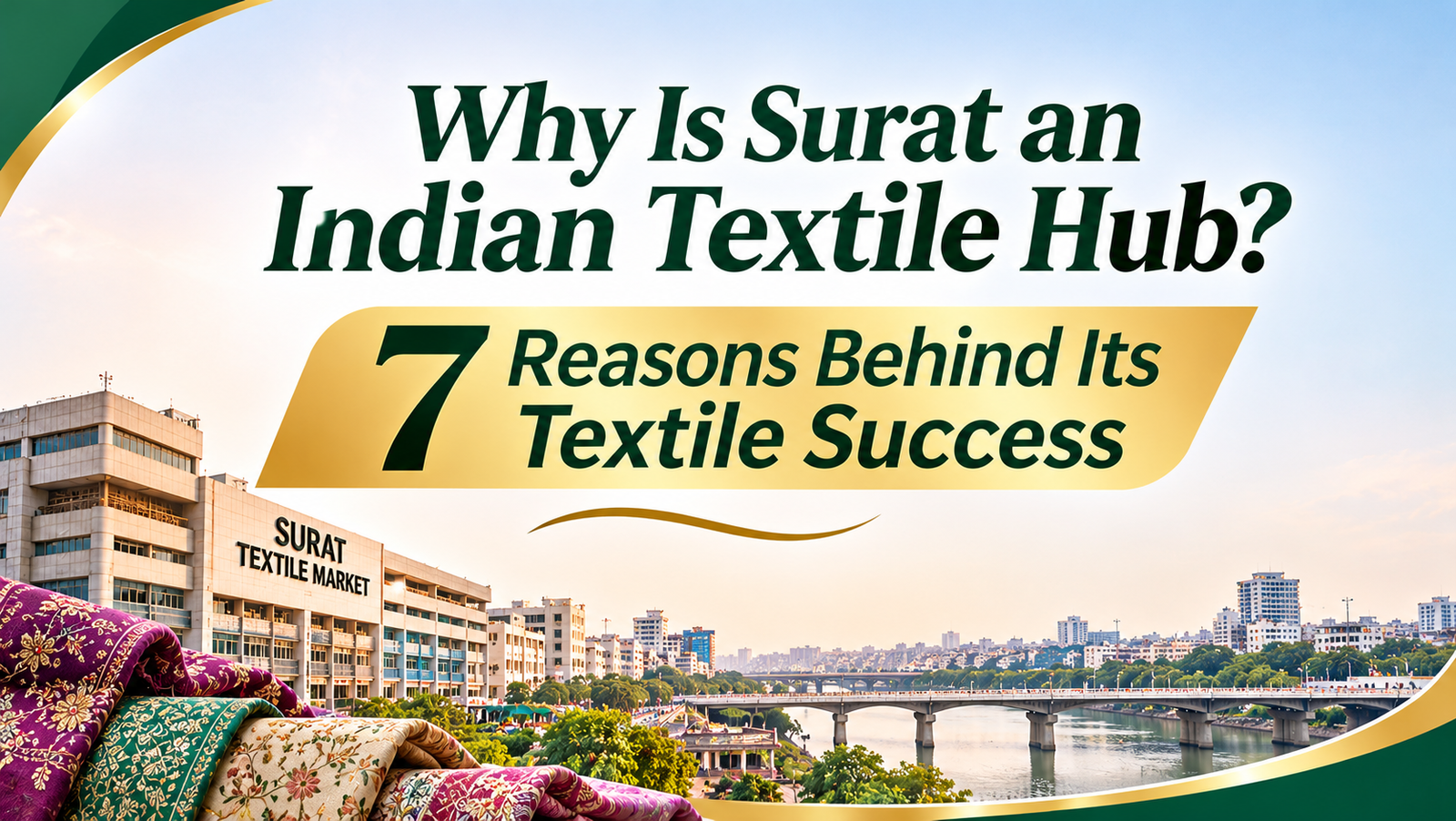
Surat is an established textile manufacturing and trading centre in India, known for synthetic fabrics, printing, embroidery and fabric processing.
For scarf and hijab businesses, Surat offers sourcing opportunities for textile qualities that may be suitable for selected printed and flowing designs.
Ajmera Fabrics operates in this industry with wholesale collections that include polyester, viscose and other materials.
For a hijab brand, the appropriate approach is to compare actual fabric samples with the intended product rather than assuming every lightweight textile will work well as a scarf.
Ajmera Fabrics for Wholesale Hijab Fabric Sourcing
Ajmera Fabrics operates from Surat, Gujarat, supplying textiles to wholesale buyers and international businesses. Its activities include fabric manufacturing, printing, finishing and export-related services.
For hijab businesses, the sourcing process begins with selecting a material that provides the required softness, drape, opacity, colour and care properties.
Its viscose and polyester collections can be reviewed for potential scarf applications, with each material evaluated according to the buyer's technical requirements.
The availability of specialised hijab qualities such as particular chiffon, modal or jersey fabrics should be confirmed directly with the sourcing team.
Businesses requiring finished stitched hijabs should also verify the relevant cutting, stitching and finishing capabilities separately.
How to Source Hijab Fabrics from India
Before approaching a supplier, prepare a clear description of the hijab you want to manufacture.
Specify whether it is a rectangular wrap, square scarf, instant hijab or another style. Include the preferred fibre composition, fabric construction, weight, usable width, colours, finish and intended market.
If the product is printed, provide details about the print design and placement. For plain hijabs, discuss shade matching and the required surface finish.
International wholesale buyers can share their fabric requirements through the Ajmera Fabrics wholesale enquiry page to discuss available textile options and export supply arrangements.
Conclusion: Choosing the Best Hijab Manufacturer in India
Finding a suitable hijab manufacturer involves understanding the finished product as well as the fabric used to make it.
Chiffon, jersey, viscose, modal, cotton and satin can serve different purposes, but their suitability depends on the construction, finishing and intended use of the hijab.
Wholesale buyers should pay close attention to coverage, comfort, drape, edge finishing, colour consistency and sample performance before choosing a manufacturing partner.
For businesses searching for the Best Hijab Manufacturer in India, a capable finished-scarf producer and a suitable fabric supplier are both important. Ajmera Fabrics provides textile sourcing options for hijab and modest fashion businesses, subject to confirming the precise material specifications and availability.
Frequently Asked Questions About Hijab Manufacturing in India
Who is the best hijab manufacturer in India?
The best manufacturer depends on the hijab style, fabric quality, finishing, sample consistency and buyer's market. Businesses should compare actual manufacturing capabilities and finished samples rather than relying only on promotional rankings.
Which fabric is best for hijab manufacturing?
Selected chiffon fabrics suit lightweight flowing styles, jersey can work for stretch-based everyday hijabs, and viscose, modal or cotton may suit other soft and comfortable scarf designs. The choice depends on coverage, drape, climate and intended use.
Can hijab fabrics be sourced from Surat, India?
Yes. Surat has textile manufacturers and suppliers offering synthetic, printed and other fabric categories. Buyers should confirm that the selected material is suitable for the intended hijab design.
What should UAE and Saudi buyers check before importing hijabs?
Buyers should review the finished scarf size, material composition, opacity, colour consistency, edge finishing, washing performance and applicable import and labelling requirements.
Does Ajmera Fabrics manufacture ready-made hijabs?
Ajmera Fabrics primarily presents itself as a fabric manufacturer and wholesale textile supplier. Buyers can enquire about appropriate fabrics, but finished hijab manufacturing should be confirmed separately.
How can I enquire about wholesale hijab fabrics from India?
Share the required fabric type, composition, weight, width, colours, finishing and intended destination with the supplier to discuss available materials and wholesale supply arrangements.