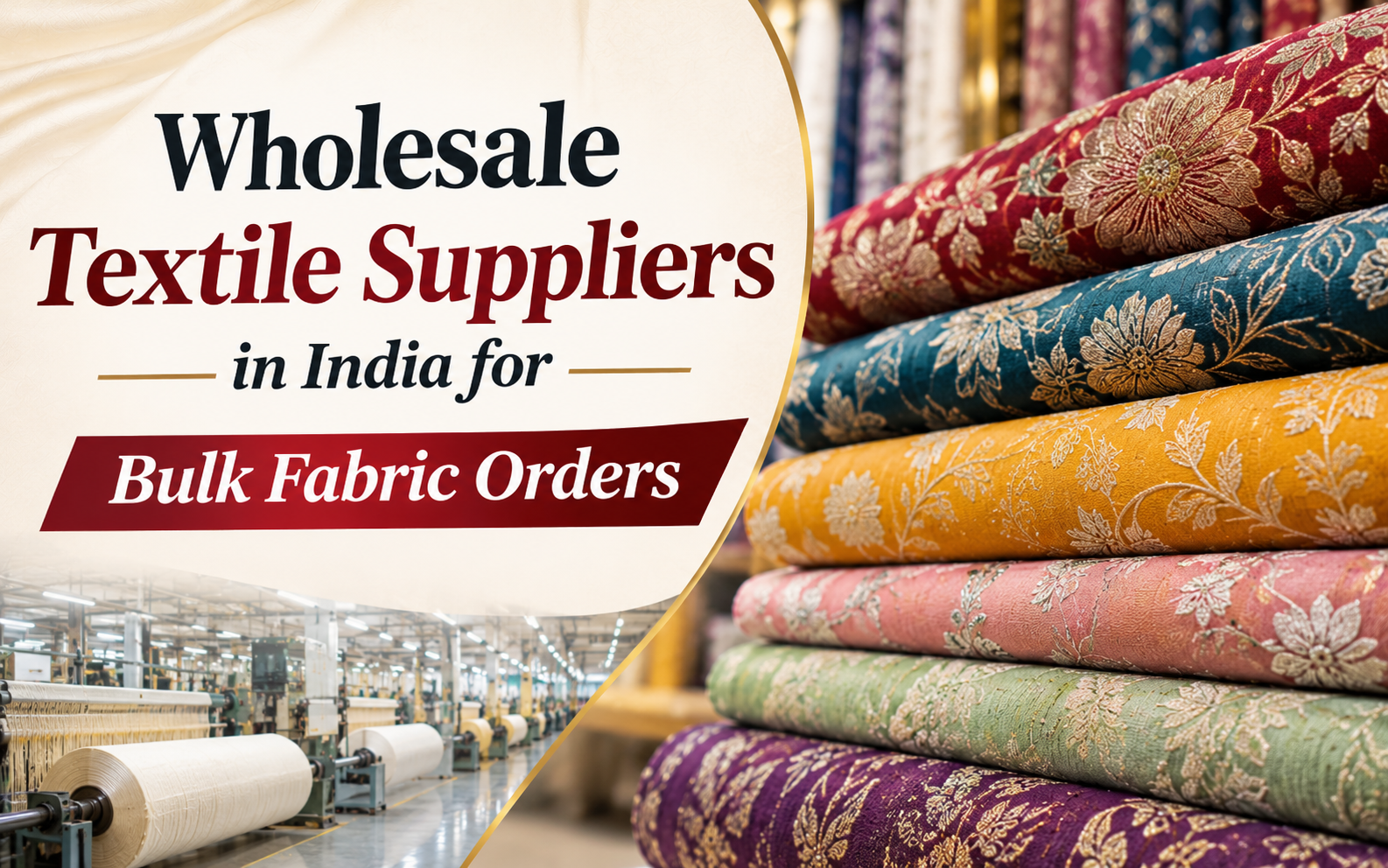
Wholesale textile suppliers in India help international garment manufacturers, clothing brands and fabric importers source materials for large-scale apparel production. From printed polyester and viscose to blended and embroidered fabrics, India offers different textile options for businesses looking for dependable wholesale supply.
However, choosing a textile supplier involves more than comparing fabric prices. International buyers need consistent material quality, accurate product specifications, reliable communication and clear shipping arrangements.
Surat, Gujarat, is one of India's established textile manufacturing centres. Ajmera Fabric, a division of Ajmera Fashion Limited, operates from Surat and offers wholesale fabric collections for garment manufacturers, textile distributors and international business buyers.
Why Do International Buyers Choose Wholesale Textile Suppliers in India?
India has a large textile manufacturing industry covering different fabric types, weaving processes, printing techniques and finishing methods.
For clothing businesses, this means access to materials suitable for different garment categories. A manufacturer producing casual dresses may require lightweight printed fabrics, while a fashion brand developing occasion wear may look for decorative finishes or embroidered textiles.
Indian textile suppliers also operate across several manufacturing centres. Surat is known for synthetic and printed fabrics, Ahmedabad has a strong cotton textile history, Tiruppur specialises in knitwear and garment production, and Bhilwara is associated with suiting and blended woven fabrics.
The best sourcing location depends on the material your business needs. Buyers should select suppliers according to fabric specialisation, technical specifications and their ability to support international procurement.
What Should You Look for in a Wholesale Textile Supplier?
A reliable wholesale textile supplier should provide accurate information about the fabrics it sells.
Before purchasing, buyers should understand the material composition, fabric weight, width, construction and finishing. These details influence cutting efficiency, garment appearance and production quality.
Consistency is particularly important for clothing businesses that manufacture repeat collections. Differences in shade, texture or fabric weight can affect finished products even when the design remains the same.
International buyers should also assess the supplier's quality-checking process, sample availability, export documentation support and communication during order preparation.
Price matters, but a fabric that performs consistently can offer better long-term value than a cheaper material that creates production problems.
Ajmera Fabric – Wholesale Textile Manufacturer and Supplier in Surat
Ajmera Fabric is a Surat-based textile manufacturing and wholesale supply business operating as a division of Ajmera Fashion Limited.
Its fabric operations include weaving, dyeing, printing, embroidery and finishing. These activities support the development of different textile qualities for garment manufacturing and wholesale distribution.
According to the company's manufacturing and business information, its production network includes weaving operations, digital and rotary printing, embroidery and fabric finishing.
The company also describes export documentation assistance, shipment consolidation and third-party inspection support for overseas buyers.
For international businesses, these services help connect fabric selection with the practical requirements of importing textiles from India.
Types of Wholesale Fabrics Available from India
Different fabrics are used for different clothing applications. The right choice depends on garment design, fabric performance, customer expectations and production requirements.
1. Polyester Fabrics for Bulk Garment Production
Wholesale polyester fabrics are used across several apparel categories, including shirts, kurtis, dresses and everyday clothing.
Polyester can be produced in different textures, fabric weights and printed finishes. Its suitability depends on how the material is constructed and processed.
Ajmera Fabric offers printed polyester collections, including Chanderi, Craft and Geoflex fabric qualities.
Garment manufacturers should compare fabric width, weight, print quality and drape before selecting polyester for their production requirements.
2. Viscose Fabrics for Women's Fashion
Viscose fabrics are often selected for their soft feel and fluid drape.
These characteristics make viscose worth considering for dresses, tunics, tops and selected modest fashion garments.
Ajmera Fabric offers printed viscose collections, including Rangrez Dupatta, Sky, Aroma and other fabric designs.
Buyers should check the actual fabric composition and performance requirements before using viscose in a clothing collection.
3. Nylon and Blended Fabrics
Nylon fabrics and synthetic blends offer different textures and finishes for selected apparel applications.
Ajmera Fabric's nylon collection includes lightweight satin-style and solid fabrics that can be considered for linings, dupattas and fashion garments.
Since blended fabrics contain more than one fibre, overseas buyers should always review the exact composition rather than relying only on the product category name.
4. Linen-Look Fabrics for Casual Collections
Linen and linen-look fabrics can be considered for relaxed clothing collections, shirts, dresses and contemporary fashion designs.
Some linen-look fabrics contain synthetic or blended fibres instead of natural linen.
International buyers should verify fibre composition before preparing garment labels and product descriptions for their local markets.
5. Stretch and Lycra Fabrics
Lycra and stretch fabrics are relevant for garments requiring flexibility and a comfortable fit.
The performance of stretch fabric depends on its fibre blend, construction and recovery properties.
Garment manufacturers should evaluate these characteristics before selecting materials for fitted clothing or stretch apparel designs.
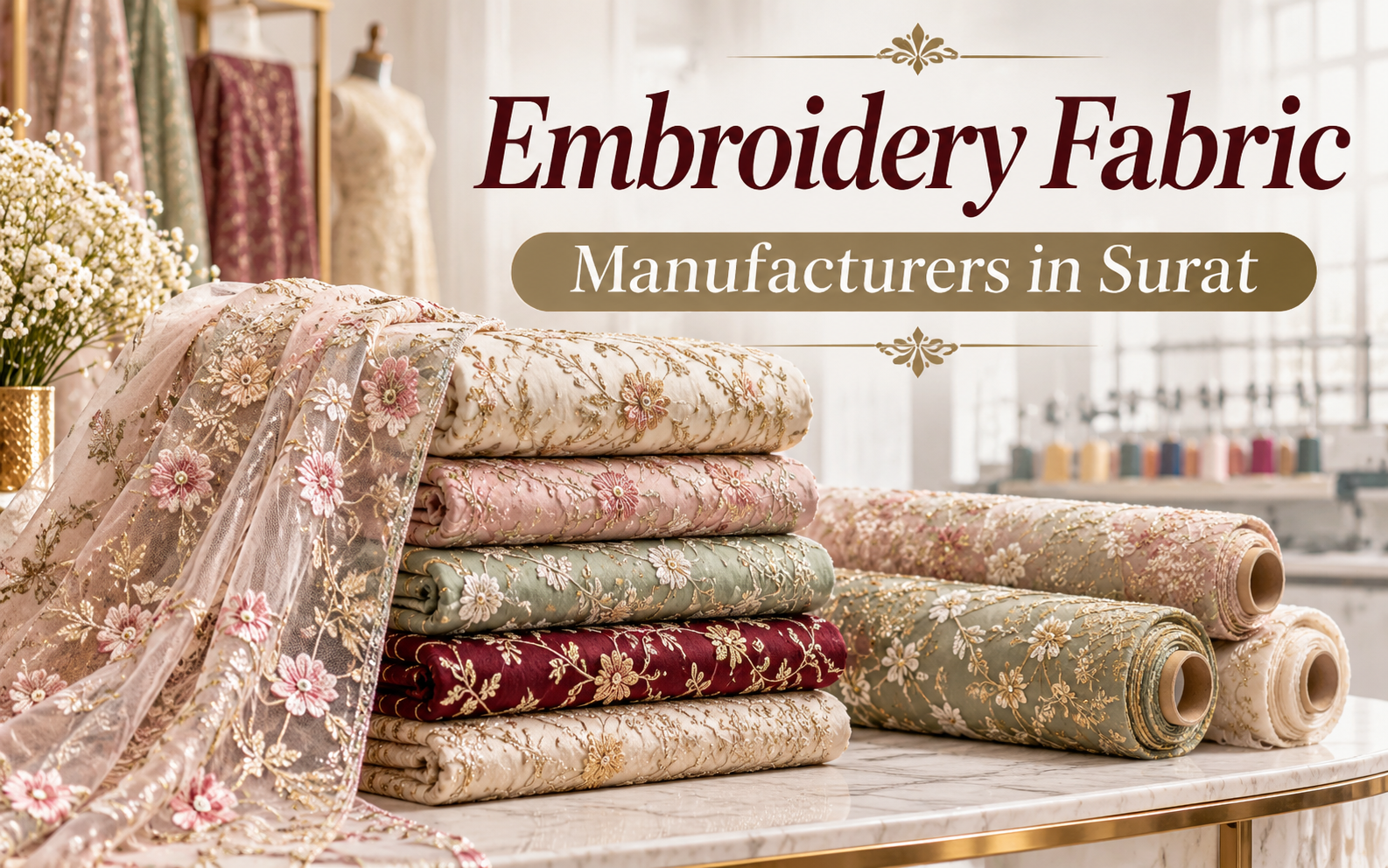
6. Embroidered Fabrics for Occasion Wear
Textile wholesalers and fashion businesses producing festive or occasion wear may require decorative fabrics.
Ajmera Fabric offers maslin fabric collections and embroidered textile qualities that buyers can evaluate for selected garment designs.
Before purchasing embroidered materials, check the base fabric, embroidery finish, usable width and design placement.
These details help garment manufacturers estimate fabric usage and plan cutting patterns more effectively.
Wholesale Textile Suppliers in India for UAE and Saudi Arabia
Fabric importers and garment businesses in the UAE and Saudi Arabia may source textiles for modest fashion, dresses, abayas, kaftans, jalabiyas and occasion wear.
For these garment categories, fabric drape, opacity, comfort and finishing can be particularly important.
A loose-fitting kaftan may require a flowing fabric, while a decorative jalabiya may use an embroidered material or a fabric with a smooth finish.
Buyers in Dubai, Abu Dhabi, Sharjah, Riyadh and Jeddah can explore suitable Indian textile collections based on their garment requirements.
Ajmera Fabric provides wholesale fabric sourcing assistance from Surat. International buyers should confirm the suitability of their selected materials and the available shipping arrangements for their destination.
Wholesale Fabrics from India for USA, UK and European Buyers
Garment manufacturers, clothing brands and textile importers in the USA, UK and European markets may need fabrics for dresses, shirts, casual clothing and seasonal fashion collections.
For these businesses, sourcing decisions should begin with product specifications.
Fibre composition, fabric weight, dimensional stability and colour fastness may affect the quality of the finished garment.
Importers should also consider the textile labelling and product safety requirements applicable to their destination country.
A supplier should be able to provide clear technical information so buyers can evaluate whether a fabric meets their production needs.
How to Check Fabric Quality Before Placing a Bulk Order
Fabric quality should be evaluated before beginning large-scale garment production.
The first step is to review material specifications, including composition, GSM, width and finish. These help buyers understand how the fabric may behave during cutting and stitching.
Physical samples are useful because product photographs cannot fully show texture, drape or thickness.
For printed fabrics, buyers should pay attention to shade consistency and print clarity. Depending on the garment application, shrinkage and colour-fastness testing may also be necessary.
Ajmera Fabric describes quality checks covering GSM, shrinkage, colour fastness and related fabric characteristics.
International buyers can discuss samples, quality requirements and inspection arrangements with the company's sourcing team.
Wholesale Textile Pricing and International Shipping
Wholesale fabric pricing depends on the type of material, fibre composition, construction, printing process, finish and order specifications.
For international buyers, the fabric price is only one part of the total sourcing cost.
Shipping, insurance, customs duties, taxes and local delivery arrangements may affect the final landed cost.
When requesting a quotation, buyers should clarify which costs are included and which are their responsibility.
Common international shipping terms such as FOB and CIF have different cost and responsibility arrangements. The agreed Incoterm and named location should be clearly stated in the commercial documents.
Buyers should also confirm packaging requirements, shipping schedules and the documents needed for customs clearance in their market.
Can Indian Textile Suppliers Provide Custom Fabric Designs?
Some Indian textile manufacturers provide custom print, colour and fabric development services for garment businesses.
This is useful for clothing brands that require specific designs or want to develop collections around selected colours and patterns.
Ajmera Fabric describes custom colour, print and selected weave development capabilities within its manufacturing operations.
Buyers should share clear artwork, colour references, fabric specifications and intended garment applications.
Before production, sample approval helps ensure that the fabric matches the required appearance and technical specifications.
How to Source Wholesale Textiles from India
International textile sourcing begins with identifying the material your business needs.
If you manufacture garments, determine the preferred fabric composition, weight, width, texture and finishing requirements.
Next, explore the Ajmera Fabric wholesale catalogue to compare available materials.
After shortlisting suitable fabrics, share your requirements with the supplier, including the destination country, product details and expected delivery schedule.
Request the relevant product specifications, sampling information and commercial quotation.
Buyers can submit sourcing enquiries through the Ajmera Fabric wholesale quotation page.
Before finalising an international order, agree on the technical specifications, payment terms, inspection arrangements and shipping responsibilities.
Choosing the Right Wholesale Textile Supplier in India
Working with a dependable textile supplier can help garment manufacturers and importers maintain more consistent production planning.
For long-term wholesale sourcing, businesses should evaluate fabric quality, product availability, technical information and supplier communication.
The right supplier should understand the intended garment application and provide materials that meet the buyer's requirements.
Ajmera Fabric offers wholesale polyester, viscose, blended, stretch and embroidered fabric collections through its Surat-based textile operations.
For businesses comparing wholesale textile suppliers in India, the company provides access to fabric categories, product information and international sourcing assistance.
Explore Ajmera Fabric or contact the sourcing team to discuss fabric requirements for your business.
Frequently Asked Questions
1. Where can I find wholesale textile suppliers in India?
India has textile manufacturing centres such as Surat, Ahmedabad, Tiruppur and Bhilwara. Surat-based suppliers such as Ajmera Fabric offer wholesale fabric collections for garment manufacturers, textile distributors and international buyers.
2. What fabrics can international buyers source wholesale from India?
International buyers can source polyester, viscose, cotton, linen, synthetic blends, stretch fabrics and embroidered materials. Available fabric types depend on the supplier and manufacturing specialisation.
3. Is Surat a good location for wholesale fabric sourcing?
Yes. Surat is an established textile manufacturing and trading centre, particularly for synthetic, printed and embroidered fabrics.
4. Does Ajmera Fabric supply wholesale textiles to international buyers?
Ajmera Fabric offers wholesale fabric sourcing and export-related assistance from Surat. International buyers can contact the company to discuss available fabrics, specifications and shipping arrangements.
5. How can buyers verify fabric quality before importing?
Buyers should review fabric composition, GSM, width, samples and applicable testing requirements. Independent inspection may also be appropriate for certain shipments.
6. Can wholesale textile suppliers in India offer custom prints?
Some manufacturers support custom fabric development. Ajmera Fabric describes custom print, colour and selected weave development services for suitable manufacturing requirements.
7. How can I request a wholesale fabric quotation from India?
Visit the Ajmera Fabric quotation page and share your fabric requirements, destination country and purchasing details to discuss available sourcing options.