Finding a reliable fabric exporter in India is an important step for international clothing brands, textile importers and garment manufacturers. The right exporter should offer suitable fabric quality, clear product specifications, competitive wholesale pricing and dependable communication throughout the sourcing process.
India has a large textile manufacturing industry, with fabric suppliers producing materials for everyday clothing, fashion collections, traditional garments and specialised apparel. Among its major textile centres, Surat, Gujarat, is known for woven, printed, synthetic and embroidered fabrics.
For international businesses looking to source wholesale fabrics from India, companies such as Ajmera Fabric provide access to fabric collections and export sourcing support directly from Surat.
Why Do International Buyers Source Fabrics from India?
India offers a wide variety of fabrics for garment production. Buyers can source different materials, prints, textures and finishes depending on their clothing collections and customer requirements.
Another advantage is the country's established textile manufacturing network. Cities such as Surat, Tiruppur, Ahmedabad and Bhilwara serve different parts of the textile industry, from fabric production to processing and garment manufacturing.
For overseas businesses, India can be a practical sourcing destination because manufacturers offer fabric choices across different price segments.
However, finding the right supplier requires more than comparing prices. The fabric must suit the finished product, meet the buyer's quality standards and remain consistent across future purchases.
What Makes the Best Fabric Exporter in India?
The best fabric exporter is not necessarily the company offering the lowest quotation. For a garment manufacturer or textile distributor, reliability and fabric consistency can be more valuable over the long term.
Consistent Fabric Quality
International buyers need materials that perform as expected during cutting, stitching, finishing and regular use.
Before purchasing, buyers should review fabric composition, GSM, usable width, weave structure and colour consistency. Depending on the finished product, shrinkage and colour-fastness testing may also be necessary.
A supplier that provides clear technical information makes fabric selection easier and reduces the chances of production problems.
Suitable Fabric Collections
A good fabric supplier should understand that different garments need different materials. A lightweight printed fabric may suit summer dresses, while embroidered fabrics may be more appropriate for occasion wear.
Having access to different fabric categories allows buyers to compare materials based on their actual business requirements.
Clear Communication and Export Support
International orders involve more than fabric production. Buyers also need clarity about packing, shipping arrangements, required documentation and delivery schedules.
Working with a supplier that communicates these details clearly can make cross-border purchasing more manageable.
Ajmera Fabric – Wholesale Fabric Export Supplier in India
Ajmera Fabric is a Surat-based fabric manufacturing and wholesale business operating as a division of Ajmera Fashion Limited.
The company supplies fabrics for wholesalers, garment manufacturers, clothing businesses and textile buyers. Its operations cover weaving, printing, embroidery, finishing and wholesale fabric distribution.
Through its fabric manufacturing and export operations, Ajmera Fabric also provides export documentation assistance, inspection support and shipping coordination for international buyers.
These services are particularly relevant for overseas businesses that need to review product specifications and shipment arrangements before confirming a fabric purchase.
Wholesale Fabric Collections for International Buyers
Fabric selection depends on the type of garment being produced. Buyers should consider how a material feels, falls, stretches and performs after stitching.
Ajmera Fabric offers several fabric categories for wholesale sourcing.
Polyester Fabrics for Garment Manufacturing
Polyester fabrics are widely used for dresses, shirts, kurtis and other fashion garments. They offer different print possibilities and can be suitable for regular clothing production.
Ajmera Fabric's polyester collection includes printed materials in different constructions and fabric weights.
For example, its Chanderi Printed Polyester Fabric is listed as 100% polyester with a 36-inch width.
Buyers can review individual fabric specifications to understand which material fits their clothing designs.
Viscose Fabrics for Dresses and Women's Wear
Viscose fabrics are often selected for their soft feel and flowing drape.
They can be suitable for dresses, tunics, tops and loose-fitting garments where comfort and movement are important.
International clothing brands should evaluate viscose fabrics for their actual fibre composition, weight and finishing requirements rather than choosing only by appearance.
Nylon and Blended Fabrics
Nylon and nylon-blend fabrics offer different textures and finishes for contemporary clothing applications.
One available example is Narmada Printed Nylon Fabric, listed with 87% polyester and 13% nylon composition, 132 GSM and a 54-inch width.
This example shows why buyers should check the exact composition of each fabric instead of relying only on its category name.
Linen-Look Fabrics for Casual and Contemporary Clothing
Linen and linen-look fabrics are relevant for relaxed clothing designs, shirts, dresses and modern fashion collections.
Importers should confirm whether a material contains natural linen fibres or is a synthetic or blended fabric designed to create a linen-like appearance.
This distinction matters when garment manufacturers prepare material labels and product descriptions for international markets.
Lycra and Stretch Fabrics
Lycra and stretch fabrics are worth exploring for apparel designs that require flexibility and a comfortable fit.
Stretch performance depends on the fabric construction and blend. Buyers should check stretch recovery, fabric weight and suitable garment applications before selecting a material.
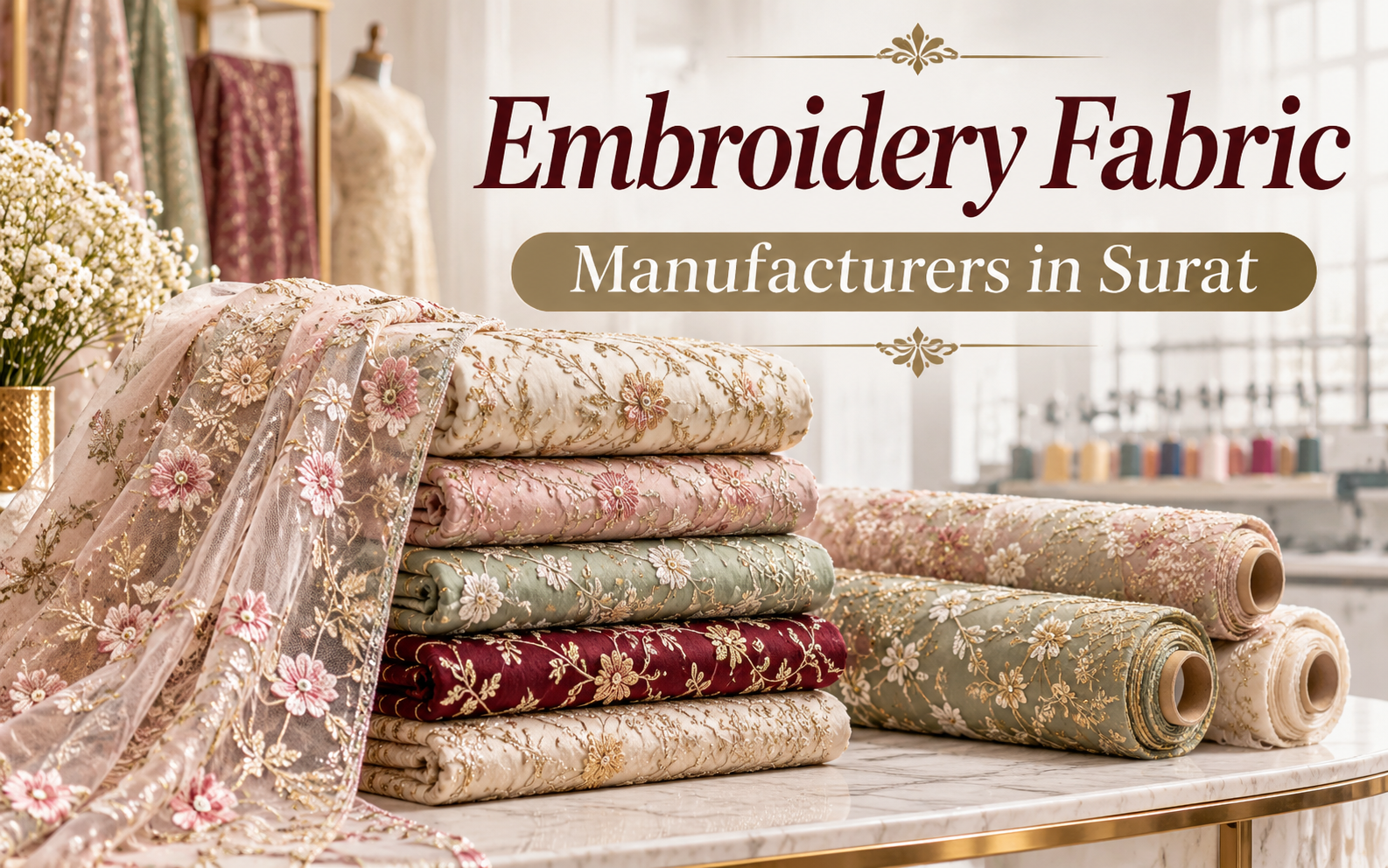
Embroidered Fabrics for Occasion Wear
For garment businesses producing festive clothing and occasion wear, embroidered maslin fabrics can provide decorative design options.
When sourcing embroidered fabrics, attention should be given to embroidery quality, base material, usable width and finishing consistency.
These details can affect the final appearance and manufacturing cost of a garment.
Fabric Export from India to UAE, Saudi Arabia, USA, UK and Other Markets
International fabric sourcing requirements vary by market, garment category and customer preference.
For businesses in the UAE, Saudi Arabia and other Gulf markets, fabric selection may involve materials suitable for modest fashion, abayas, kaftans, dresses and occasion wear.
Lightweight fabrics, flowing drapes and decorative finishes can be relevant to these garment categories. However, the right choice depends on the design, expected comfort and production requirements.
Clothing brands and garment manufacturers in the USA and UK may source printed polyester, viscose, blends and other fabrics for dresses, shirts, casual wear and fashion collections.
Buyers in these markets should also check applicable textile labelling rules, product safety requirements and any testing standards relevant to their finished garments.
For textile distributors and garment businesses in African, European and other international markets, the same sourcing principles apply: select fabrics based on product use, customer expectations and verified technical specifications.
Buyers interested in sourcing from Ajmera Fabric can discuss their destination country and shipping requirements directly with the company's export team. Availability and shipment terms should be confirmed for each order.
Why Is Surat Important for Fabric Exporters in India?
Surat is one of India's established centres for synthetic textile manufacturing and fabric trading.
The city has an interconnected network of fabric producers, processors, printers, embroidery businesses and wholesalers. This helps international buyers explore multiple fabric qualities and finishes within the same sourcing region.
For garment manufacturers, access to these textile operations can make it easier to compare fabric options and communicate production requirements.
Ajmera Fabric operates from Surat and provides wholesale sourcing support through its textile manufacturing and distribution network.
How to Check Fabric Quality Before Importing from India
One of the most important parts of international textile sourcing is checking whether the fabric matches the intended garment.
A fabric may look attractive in a catalogue but behave differently during cutting, stitching or washing.
Buyers should begin by reviewing the fabric's fibre composition, GSM, width, texture and finish. These specifications help determine how the material will perform during garment manufacturing.
Requesting physical samples can provide a better understanding of the fabric's feel, drape and construction.
For printed fabrics, shade consistency and repeat design availability may be important. For stretch fabrics, recovery and dimensional stability should be evaluated.
Where necessary, buyers can request appropriate testing or independent inspection before shipment.
Ajmera Fabric describes quality-checking processes covering fabric weight, shade consistency and weave integrity. Its team also provides sample assistance and video-based stock viewing for buyers who cannot visit Surat in person.
How Can International Buyers Source Wholesale Fabric from India?
The fabric sourcing process should begin with a clear understanding of the finished product.
If you manufacture dresses, shirts, traditional clothing or modest fashion, first decide which fabric composition, weight and finish your product requires.
Next, explore the available materials through the Ajmera Fabric wholesale fabric catalogue.
After shortlisting fabrics, share your requirements with the supplier. Explain your preferred material, colour or design, estimated purchase volume, destination country and expected delivery schedule.
Request a quotation that clearly explains fabric pricing, specifications, packing arrangements and applicable shipping terms.
Once the fabric has been evaluated, confirm the final specifications and any necessary documentation before proceeding with the purchase.
For direct assistance, international businesses can use the Ajmera Fabric wholesale quotation page or speak with the company's sales team.
Choosing a Reliable Fabric Exporter in India for Your Business
Finding the best fabric exporter in India depends on what your business needs.
A clothing brand may prioritise fabric finish and repeatable designs. A textile distributor may place greater importance on consistent specifications and reliable supply. A garment factory may need materials that perform well during regular production.
For all these buyers, the most useful supplier is one that understands the product requirements and communicates clearly about fabric quality, pricing and delivery.
Ajmera Fabric is one option for international businesses exploring polyester, viscose, nylon blends, linen-look materials, stretch fabrics and embroidered textile collections from Surat.
Buyers can review the company's catalogue, compare fabric specifications and contact Ajmera Fabric to discuss their sourcing requirements.
Frequently Asked Questions About Fabric Exporters in India
1. Which is the best fabric exporter in India?
The best fabric exporter depends on your business requirements. Compare fabric quality, material range, manufacturing capabilities, export support and communication. Ajmera Fabric is a Surat-based wholesale fabric supplier that international buyers can consider.
2. Which city is famous for fabric exports in India?
Surat, Gujarat, is a major centre for synthetic, printed and embroidered fabrics. Other Indian textile centres specialise in different fabrics and manufacturing processes.
3. What fabrics can international buyers import from India?
International buyers can source polyester, viscose, cotton, linen, silk, nylon blends, stretch fabrics and embroidered materials, depending on supplier availability and garment requirements.
4. Does Ajmera Fabric support international fabric buyers?
Yes. Ajmera Fabric provides wholesale fabric sourcing assistance, product specifications, export documentation support and coordination for international orders. Shipping arrangements should be confirmed for the buyer's destination.
5. Can buyers request fabric samples before importing from India?
Yes. Ajmera Fabric offers sample assistance and video-based stock viewing so overseas buyers can evaluate available fabrics before confirming their purchase.
6. How do I find a wholesale fabric supplier in India?
Start by identifying your fabric requirements and comparing suppliers by composition, quality, product range and export support. You can explore Ajmera Fabric's online catalogue and request a wholesale quotation directly from its Surat team.
7. How can I contact a fabric exporter in India?
You can contact Ajmera Fabric through its official website at ajmerafabrics.com. Share your fabric requirements, business details and destination country to discuss the available sourcing options.