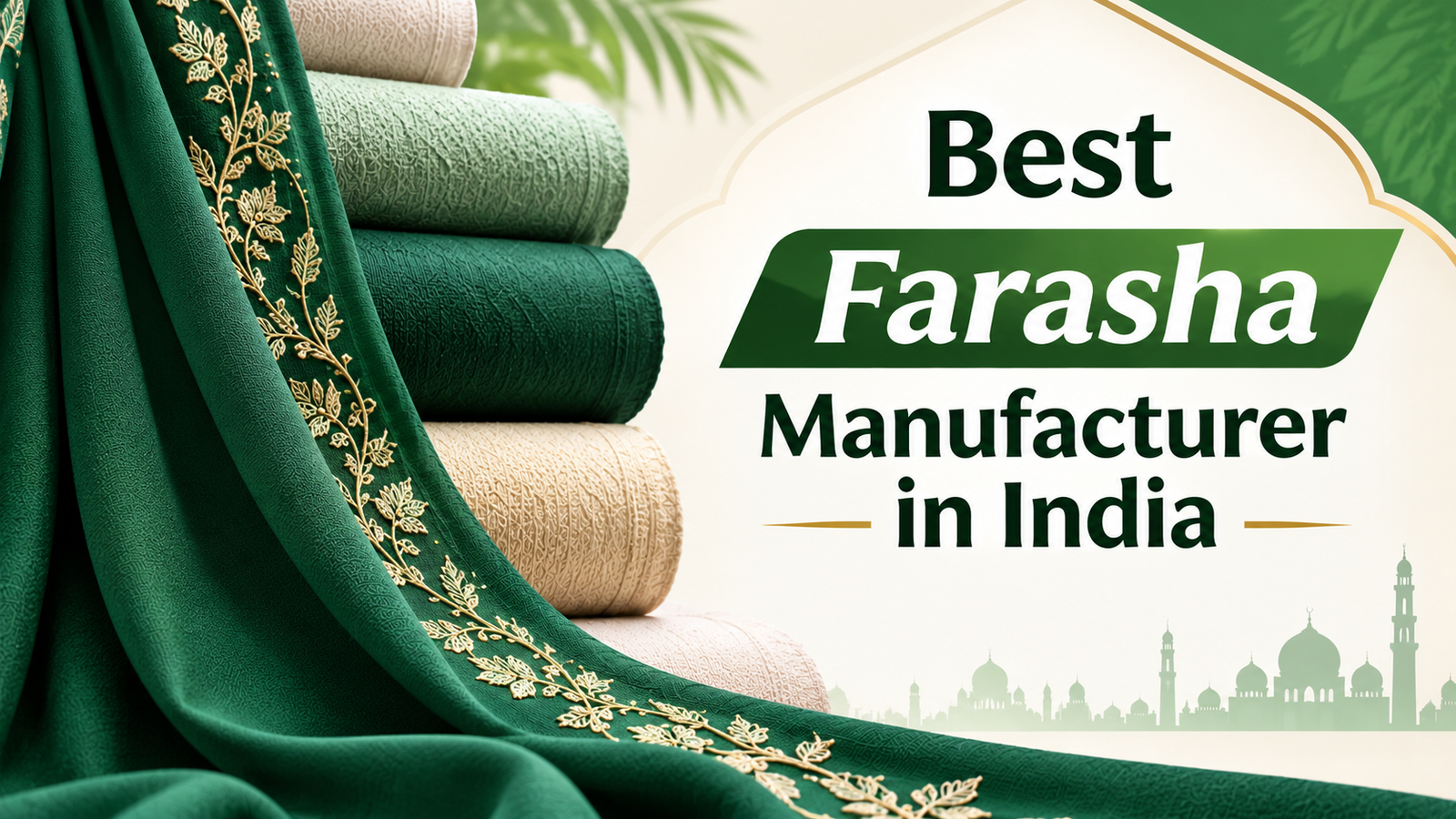
Best Farasha Manufacturer in India is an important search for clothing wholesalers, modest fashion brands, and importers looking for butterfly-style Farasha dresses and suitable manufacturing partners. In countries such as the UAE, Saudi Arabia, Kuwait, and Qatar, Farasha garments are known for their flowing shape, wide sleeves, and comfortable fit. However, a beautiful design alone is not enough for wholesale buyers. The right fabric, stitching quality, finishing, and consistency matter just as much.
When a customer picks up a Farasha dress, the first thing they notice may be its colour or embroidery. But once they wear it, the fabric makes the real difference. A material that feels too heavy can affect comfort, while a fabric that is too stiff may not create the flowing butterfly shape the customer expects.
India offers a wide range of textile and clothing sourcing options. In Surat, Gujarat, Ajmera Fabrics, a division of Ajmera Fashion Limited, works in fabric manufacturing, wholesale supply, and textile exports. Its fabric collections provide sourcing options that garment businesses can evaluate for Farasha dresses, abayas, kaftans, and other modest fashion designs.
What Is a Farasha Dress?
A Farasha is a loose-fitting garment with a wide, flowing silhouette inspired by the shape of butterfly wings. The name comes from the Arabic word for butterfly.
Unlike a regular dress with fitted sleeves, many Farasha designs have wide sleeves that blend into the body of the garment. This creates a relaxed shape with plenty of movement.
Farasha garments are commonly found in modest fashion collections, including butterfly abayas, occasion dresses, and some kaftan-inspired designs. The exact construction can vary between brands, so wholesale buyers should always check whether they are purchasing a closed dress, an open abaya, or a layered outfit.
For manufacturers, this style requires careful fabric selection. The material needs to move naturally without making the garment appear too bulky or shapeless.
Why Fabric Quality Matters in Farasha Manufacturing
Farasha dresses generally use a wider garment pattern than many regular dresses. Because of this, the fabric has a strong influence on the finished appearance.
Imagine two Farasha dresses made using the same pattern. One uses a soft material that falls smoothly from the shoulders, while the other uses a stiff fabric that spreads outward. Even with identical stitching, the dresses will look and feel different.
This is why experienced clothing buyers evaluate the fabric before approving a finished design.
For everyday Farasha garments, softness, comfort, coverage, and easy care may be important. For festive collections, buyers may prefer fabrics with a smoother finish, decorative embroidery, or a more elegant drape.
There is no single fabric that works for every Farasha design. The right choice depends on the garment's purpose and the customers who will wear it.
Best Fabrics for Farasha Dress Manufacturing
Crepe Fabric for Everyday Farasha Dresses
Crepe is a popular fabric option for modest clothing because many varieties have a soft texture and a controlled fall. Selected crepe fabrics can work well for Farasha designs that need movement without excessive volume.
However, crepe is a broad fabric category. Some types are lightweight, while others have more body. Buyers should check composition, opacity, weight, and washing performance before selecting a specific crepe quality.
For daily-wear Farasha collections, practical care requirements are often just as important as appearance.
Chiffon Fabric for Flowing Farasha Styles
Chiffon is often used when the design requires a lightweight, flowing appearance. It works particularly well for certain layered Farasha dresses and occasion garments.
The main consideration is transparency. Many chiffon fabrics need a lining or inner dress to provide suitable coverage.
Garment manufacturers should also consider how the outer chiffon layer moves over the lining. If the two materials behave differently, the dress may not fall as intended.
Satin Fabric for Premium Farasha Collections
Selected satin fabrics can give Farasha dresses a smooth finish and a more dressed-up appearance. This makes satin worth considering for evening wear, festive collections, and premium designs.
However, not every satin fabric is suitable. Some varieties may have excessive shine, while others may be too heavy or difficult to handle during stitching.
Before approving satin for Farasha manufacturing, buyers should check the drape, seam appearance, fabric weight, and response to pressing.
Embroidered Fabrics for Farasha Occasion Wear
Embroidery is often used to add detail to the neckline, front panel, sleeve edges, or other selected areas of a Farasha dress.
For wholesale clothing businesses, embroidery quality matters because loose threads, uneven stitching, and heavy decorative work can affect the appearance and comfort of the final garment.
Ajmera Fabrics offers Rajvansh embroidered Malai Satin fabric in its textile catalogue. The listed product has a weight of 109 GSM and an embroidered width of 58 inches. This gives garment businesses a specific textile option to examine when considering decorative fabrics for occasion wear.
Its suitability for a particular Farasha design should be confirmed through sampling and pattern testing rather than assumed from the product category alone.
What Makes a Good Farasha Manufacturer in India?
A good Farasha manufacturer needs to understand both garment construction and the behaviour of different fabrics.
The wide sleeves and flowing body are important parts of the design. If the pattern is not balanced properly, the garment may pull around the shoulders or create unwanted folds when the wearer moves.
Wholesale buyers should therefore ask to see a complete garment sample before approving production.
A sample should show how the dress looks with the arms lowered, how the sleeves move, and how the fabric falls during walking. It should also demonstrate the neckline construction, seam finishing, and any decorative details.
For businesses ordering embroidered Farasha dresses, the manufacturer should be able to explain how the embroidery is positioned on the finished garment and whether it affects comfort or movement.
How Farasha Fabric Width Affects Manufacturing Cost
Fabric width is one of the most important details when planning a Farasha collection.
A Farasha pattern often requires additional width around the sleeves and sides. If the fabric is narrow, the manufacturer may need additional panels or seams to achieve the intended shape.
Wider fabric may help with certain designs, but the actual benefit depends on the garment pattern, size range, and cutting layout.
This is why buyers should not compare fabrics using price per metre alone. The amount of material needed for one finished garment can change depending on the usable fabric width.
Before purchasing fabric, it is useful to prepare a sample pattern and calculate its actual fabric consumption. This gives the clothing business a more realistic understanding of production cost.
Farasha Manufacturing for UAE Wholesale Buyers
The UAE is an important market for modest fashion, with boutiques, garment traders, and clothing businesses serving customers with different preferences.
In Dubai, some businesses focus on contemporary butterfly abayas and premium occasion collections. Other buyers may prefer practical Farasha styles with comfortable fabrics and simple finishing.
Wholesale buyers in Sharjah, Abu Dhabi, and Ajman may also have different requirements depending on whether they supply boutiques, tailoring businesses, or ready-made clothing stores.
Instead of assuming that one Farasha design will suit every customer, buyers should identify their intended market before selecting the fabric and manufacturing pattern.
For example, an embroidered Farasha dress for an occasion collection may require a different textile from a lightweight butterfly-style garment intended for everyday wear.
Farasha Dresses for Saudi Arabia and Other Gulf Markets
Farasha and butterfly-style garments are also relevant to modest fashion businesses serving customers in Saudi Arabia, Kuwait, Qatar, Oman, and Bahrain.
Buyers may look for different sleeve shapes, embroidery placements, fabric finishes, and colour combinations depending on their collections.
For wholesale suppliers serving Riyadh, Jeddah, Dammam, Doha, Kuwait City, or Muscat, it is important to understand the garments their customers actually purchase.
Rather than relying on general assumptions about regional preferences, manufacturers should discuss garment samples, sizing requirements, fabric choices, and finishing details directly with buyers.
This is especially useful when preparing Farasha collections for Ramadan, Eid, weddings, or other festive occasions.
How to Check Farasha Garment Quality Before Wholesale Purchasing
When evaluating a Farasha dress, the overall look is only the starting point. The product should also be comfortable and properly constructed.
The fabric should have the required opacity and drape. Stitching should be neat, and the wide sleeves should move naturally without pulling against the neckline or shoulders.
If the design includes embroidery, the decorative work should be secure and should not create uncomfortable rough areas on the inside.
For layered Farasha garments, buyers should check both the outer material and the inner lining. The lining should provide suitable coverage without restricting movement.
It is also worth checking how the fabric behaves after washing or cleaning according to its care instructions.
A sample that performs well during these checks provides a more dependable basis for choosing a manufacturing partner.
Why Surat Is Important for Farasha Fabric Sourcing
Surat is one of India's established textile centres, known for synthetic fabrics, printed textiles, embroidery, and processing activities.
For Farasha manufacturers, access to different fabric qualities makes Surat a useful sourcing location. A clothing business may need a plain fabric for the main body of a garment and a different decorative material for selected design details.
Working with a textile supplier that provides clear specifications can make the fabric selection process more organised.
Ajmera Fabrics works in wholesale textile manufacturing and supply from Surat. Its collections include polyester, viscose, and embroidered fabrics, alongside services related to textile processing and international supply.
However, buyers should confirm the availability of the exact fabric required for their Farasha design before placing a purchase request.
How to Source Farasha Fabrics from India
The best way to begin is with a clear description of the garment you want to manufacture.
Explain whether the finished product will be a butterfly abaya, a closed Farasha dress, or a layered occasion garment. Share the preferred fabric type, colour, weight, width, and finishing requirements.
If embroidery is involved, specify where it should appear and whether the fabric will be used for the entire garment or only selected sections.
It is also useful to share a reference sample or garment pattern, as this helps the fabric supplier understand the required drape and material behaviour.
International buyers can send their fabric requirements through the Ajmera Fabrics wholesale enquiry page to discuss available fabrics, specifications, and supply arrangements.
Choosing the Best Farasha Manufacturer in India
There is no single manufacturing approach that works for every Farasha collection. Some brands need simple, flowing dresses, while others require carefully finished embroidery, layered materials, or more elaborate occasion wear.
The right manufacturing partner should be able to produce a sample that reflects the intended design, with suitable stitching, fabric movement, and finishing.
For fabric sourcing, businesses should focus on composition, weight, usable width, opacity, and the way the material behaves after cutting and stitching.
Ajmera Fabrics provides textile sourcing options for businesses developing Farasha and other modest fashion collections. Buyers should confirm the precise fabric qualities needed for their garments, while separately verifying the capabilities of the company responsible for stitching the finished product.
For businesses searching for the Best Farasha Manufacturer in India, choosing a capable garment producer and a suitable fabric supplier is an important part of building a reliable wholesale collection.
Frequently Asked Questions
What is Farasha clothing?
Farasha is a loose, butterfly-style garment with wide sleeves and a flowing silhouette. The term is commonly used for certain abayas, dresses, and modest fashion designs.
Which fabric is best for Farasha dresses?
It depends on the design. Selected crepe fabrics can suit everyday styles, chiffon may work for layered garments, and satin or embroidered fabrics can be considered for occasion wear.
Can Farasha fabrics be sourced from India?
Yes. India has textile suppliers offering fabrics that garment manufacturers can evaluate for Farasha production. Buyers should confirm the required composition, weight, width, opacity, and finishing.
What should wholesale buyers check before choosing a Farasha manufacturer?
Buyers should review the finished garment sample, fabric quality, sleeve construction, stitching, measurements, embroidery, and overall comfort before approving production.
Is Surat a suitable place to source Farasha fabrics?
Surat is known for synthetic, printed, and embroidered textiles. Clothing manufacturers can explore suitable qualities there, while confirming the specifications and availability of each fabric.
Does Ajmera Fabrics manufacture finished Farasha dresses?
Ajmera Fabrics primarily presents itself as a textile manufacturer and wholesale supplier. Buyers can enquire about suitable Farasha fabrics, but finished garment manufacturing should be confirmed separately.
How can international buyers enquire about Farasha fabrics from India?
Buyers can share their preferred fabric type, composition, width, weight, colour, and design requirements with Ajmera Fabrics through its wholesale enquiry page.