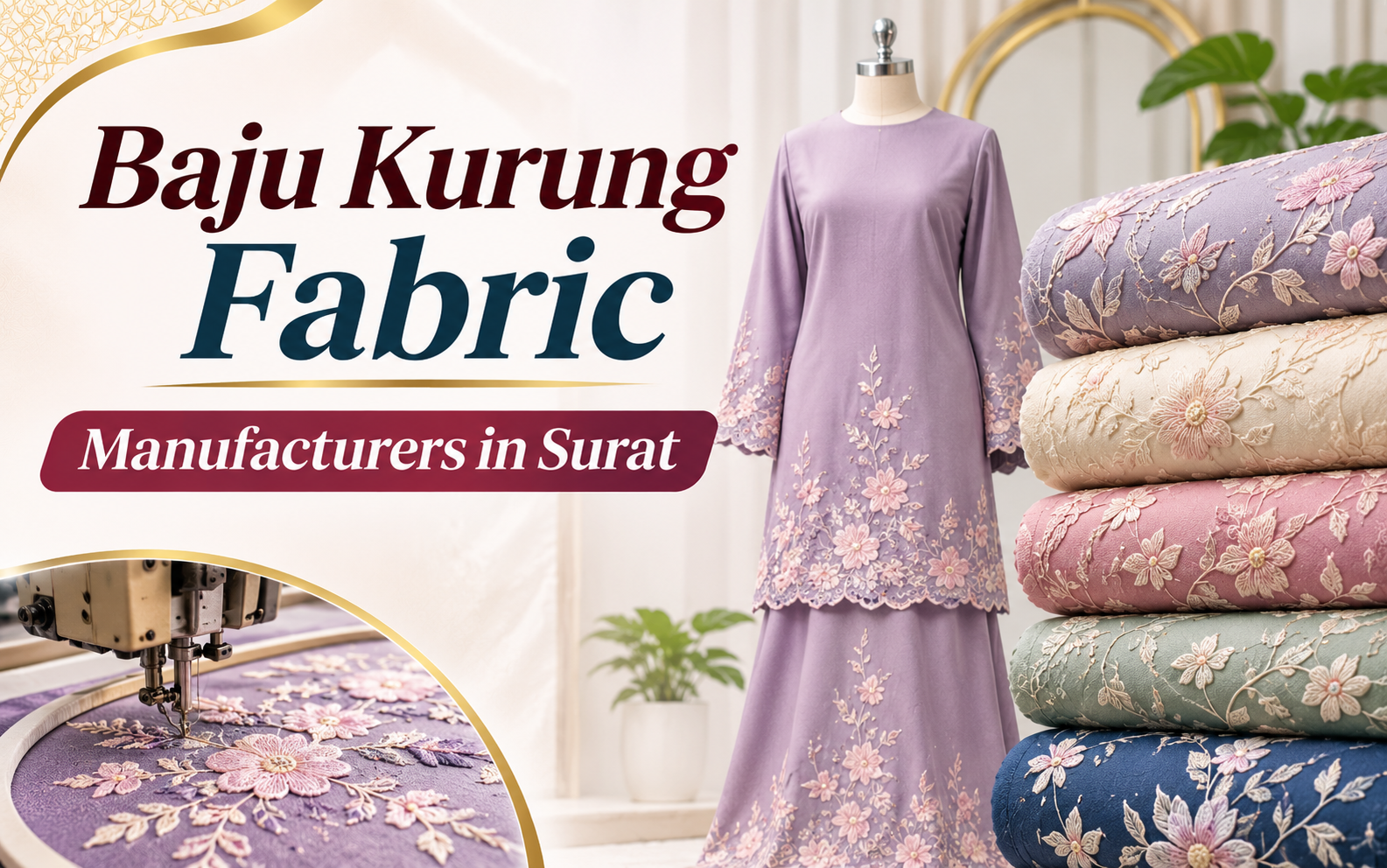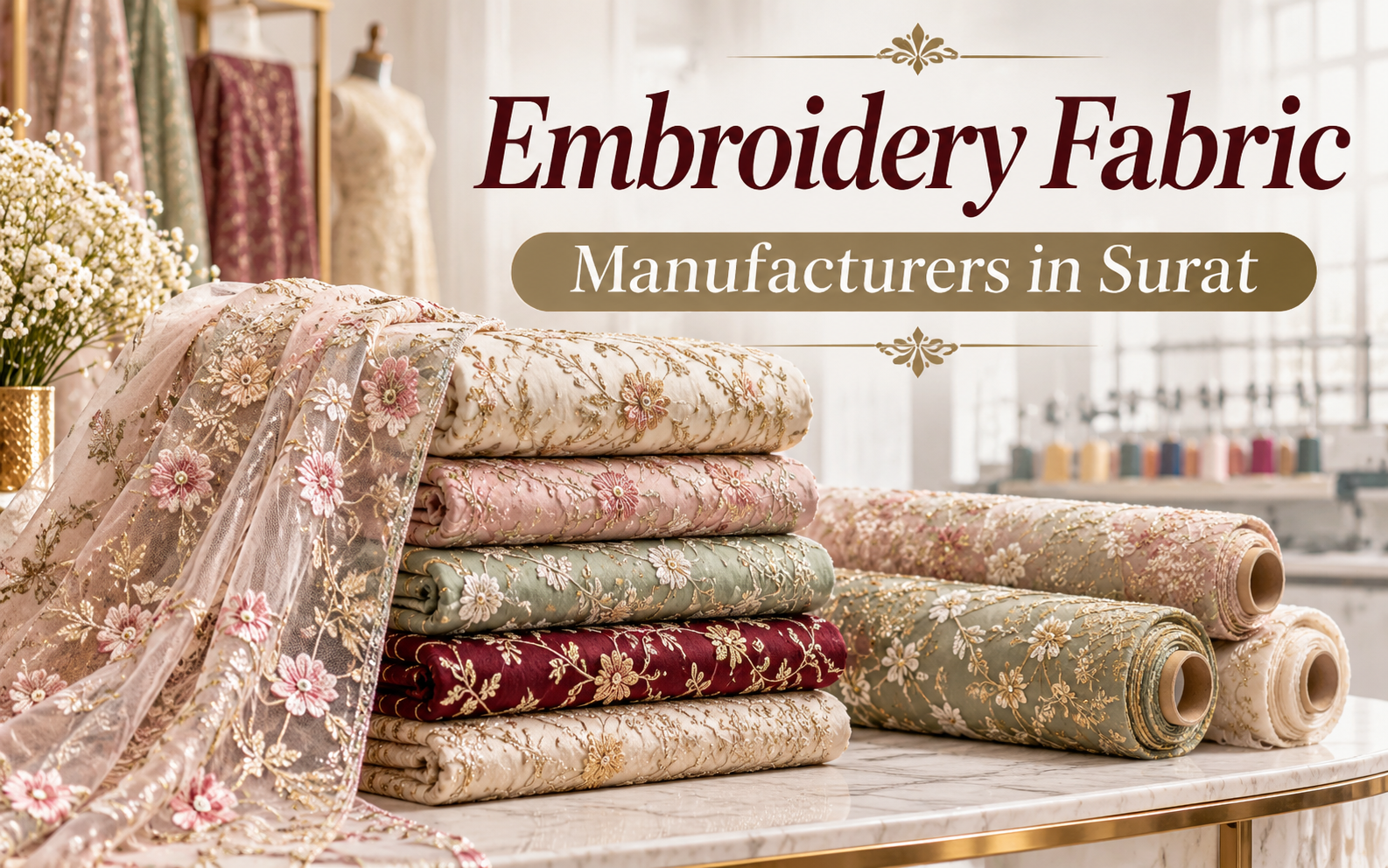
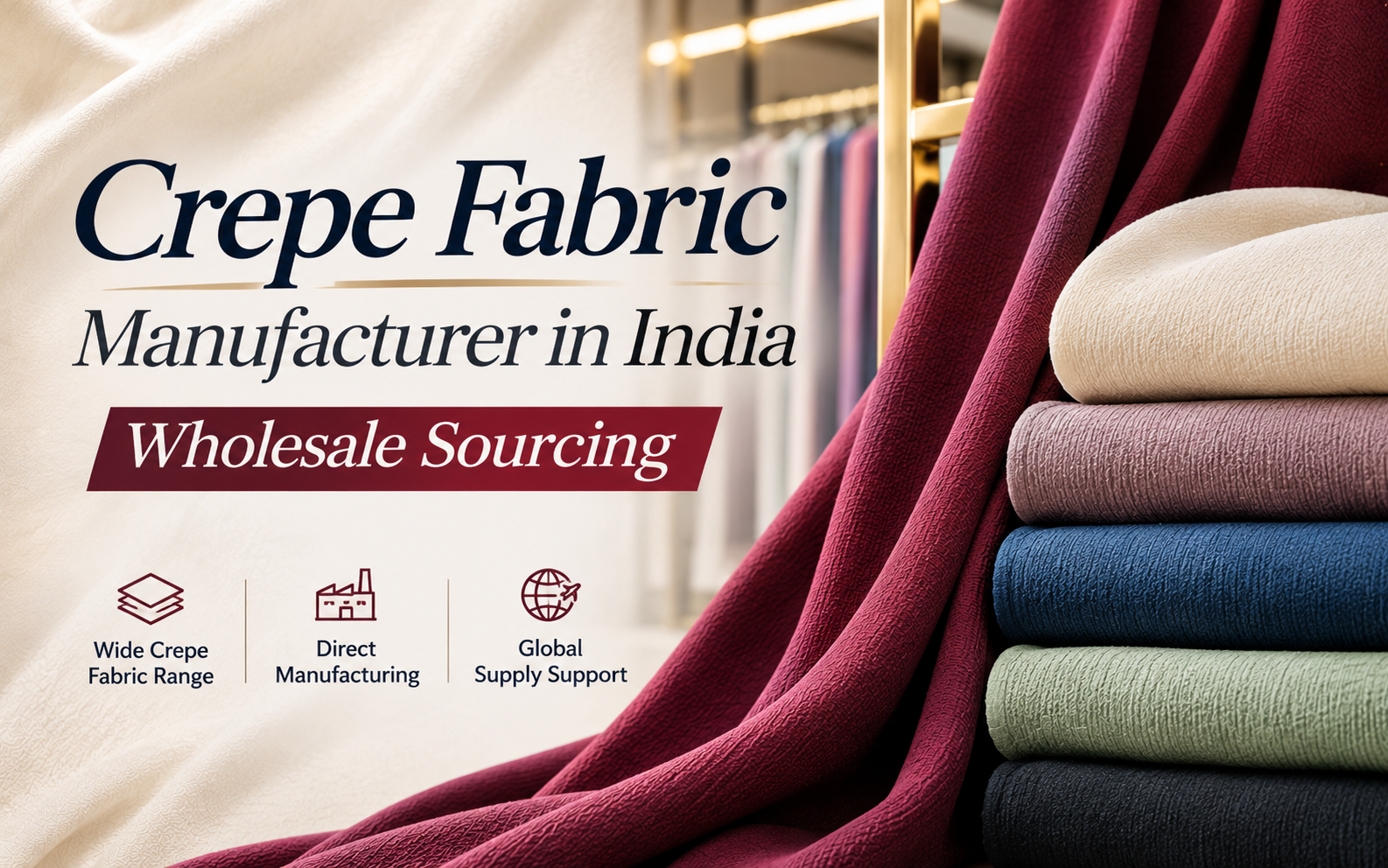
Abaya fabric manufacturers in India are a sourcing option for garment factories, modest fashion brands and textile wholesalers serving the Middle East. Buyers in Saudi Arabia, the UAE, Kuwait, Qatar, Oman and Bahrain look for fabrics that offer the right drape, opacity, comfort and finish for different abaya designs.
A good abaya starts with the right material. A fabric may look attractive in a photograph but feel too heavy, become transparent in daylight or lose its shape after washing. For international buyers, fabric composition and quality are just as important as colour and appearance.
Surat, Gujarat, is an established textile manufacturing centre for synthetic, printed and embroidered fabrics. Ajmera Fabric, a division of Ajmera Fashion Limited, offers wholesale polyester, viscose and other fabric collections that garment businesses can explore for suitable clothing applications.
What Fabrics Are Used for Abaya Manufacturing?
Abayas are made using different materials depending on their design, price segment and intended use. Everyday abayas may require a comfortable matte fabric with a soft drape, while occasion wear designs may feature smoother finishes, embroidery or decorative layers.
Nida, crepe, Zoom, polyester blends, satin and chiffon are among the fabric names commonly encountered in the abaya market. However, these materials do not have identical characteristics.
For example, chiffon is often used for sleeves, overlays or decorative panels because many qualities are transparent. A fabric used for the main body of an abaya usually needs greater coverage.
Buyers should select fabric based on the finished garment's requirements rather than relying only on a trade name.
Why Source Wholesale Abaya Fabrics from India?
India has an established textile manufacturing industry with weaving, dyeing, printing and finishing capabilities. Surat is particularly relevant for businesses exploring polyester and synthetic fabric production.
For international abaya manufacturers, this creates opportunities to source different woven constructions, textures and finishes for garment development.
However, not every textile supplier specialises in abaya fabrics. A company selling printed dress materials may not automatically supply plain black Nida, Zoom or crepe qualities.
Before selecting an Indian fabric manufacturer, buyers should confirm the exact composition, available colours, production specifications and suitability for abaya manufacturing.
Best Fabric Types for Abayas and Modest Fashion
Nida Fabric for Everyday Abayas
Nida is a recognised trade name in the abaya fabric market. It is generally associated with a soft finish, flowing drape and a neat appearance.
Many Nida qualities are polyester-based, although specifications vary between suppliers. Different products may have different weights, softness and opacity.
For everyday abayas, buyers should check how the material feels in warm weather, how it hangs from the shoulders and whether it provides suitable coverage without a lining.
Black Nida fabric should also be evaluated for shade consistency and colour-fastness performance.
Crepe Fabric for Abayas and Open Abaya Designs
Crepe is known for its slightly textured surface. Depending on its fibre composition and construction, it can have a flowing or more structured drape.
Polyester crepe is often considered for everyday garments, while other crepe constructions may suit premium fashion collections.
For an open abaya, the material needs to move comfortably without becoming too stiff. Buyers should test the actual fabric on a garment sample to assess its fall and finishing.
Zoom Fabric for Modest Clothing
Zoom is another commercial fabric name used in the abaya market. Certain Zoom qualities are known for their smooth appearance and drape.
However, the name does not guarantee a particular composition or GSM. Two suppliers may offer different fabrics under the same name.
Buyers should compare softness, stretch, recovery, opacity and washing performance before approving Zoom fabric for garment production.
Polyester Fabrics for Abaya Manufacturing
Polyester fabrics can offer different levels of softness, wrinkle resistance and shape retention depending on the yarn, weave and finish.
Suitable woven polyester qualities may be considered for abayas, long outer garments and other modest clothing designs.
Ajmera Fabric has a wholesale polyester fabric collection with different printed materials for garment manufacturing.
Buyers specifically requiring plain black abaya fabric should confirm the availability of an appropriate quality rather than assuming that printed polyester fabric is interchangeable with abaya-grade material.
Viscose Fabrics for Flowing Modest Wear
Viscose is often selected for its soft feel and fluid drape. Certain viscose qualities can be suitable for dresses, kaftans, tunics and relaxed modest fashion garments.
Ajmera Fabric's viscose collection includes printed materials and blends with different fabric characteristics.
For abaya applications, manufacturers should review shrinkage, opacity, weight and care requirements before choosing a viscose material.
Satin and Embroidered Fabrics for Occasion Wear Abayas
Occasion wear abayas often include decorative details, embroidered panels or smooth-finish materials.
Satin can provide a soft sheen, while embroidered fabrics may be used for decorative sleeves, front panels and selected garment designs.
Ajmera Fabric lists Rajvansh Embroidered Malai Satin Fabric in its wholesale catalogue. Buyers can review this as a decorative fabric option, subject to its suitability for the intended garment.
For other embroidered materials, explore the embroidered maslin fabric collection.
Wholesale Black Abaya Fabric: What Should Buyers Check?
Black is a common colour for abayas, particularly in Saudi Arabia and several other Gulf markets. However, black fabric quality cannot be judged by colour alone.
A high-quality black abaya fabric should meet the manufacturer's required standard for shade consistency, opacity, drape and surface finish.
Buyers should examine samples under natural daylight and indoor lighting. Some materials appear deep black indoors but show a different tone in bright light.
Colour fastness is also important, especially for garments intended for regular washing. Depending on the material, buyers may need to review rubbing resistance and shrinkage.
For repeat garment collections, an approved shade reference helps manufacturers compare future fabric lots with the original material.
Abaya Fabric Wholesale Sourcing for Saudi Arabia
Saudi Arabia is an important market for abaya manufacturers and modest fashion businesses.
Garment manufacturers and fabric wholesalers in Riyadh, Jeddah, Dammam and Al Khobar may source fabrics for everyday abayas, open abayas, formal styles and festive collections.
For daily-wear garments, comfort, opacity and easy-care properties may be important. For occasion wear, manufacturers may focus more on texture, decorative finishing and the overall appearance of the garment.
Saudi buyers should also confirm applicable textile labelling, product conformity and import requirements before arranging shipments from India.
Wholesale Abaya Fabric Suppliers from India to UAE
Abaya manufacturers, garment factories and textile traders in Dubai, Abu Dhabi and Sharjah may require different fabric qualities for their collections.
Some businesses produce traditional black abayas, while others develop contemporary open abayas, embroidered outerwear and matching modest fashion sets.
The right material depends on the finished garment's design. A flowing open abaya may need a different fabric from a structured formal abaya.
Dubai textile wholesalers should compare the actual fabric composition, finish and technical specifications before importing.
When sourcing from Surat, buyers can also explore suitable decorative, printed and blended fabrics for related modest fashion clothing.
Abaya Fabric Sourcing for Kuwait, Qatar, Oman and Bahrain
Modest fashion businesses in Kuwait, Qatar, Oman and Bahrain may also source abaya fabrics from international textile suppliers.
However, fabric preferences should not be assumed to be identical across these markets. Individual brands may have different requirements for weight, softness, opacity, colour and finishing.
Retailers and garment manufacturers should begin with their approved garment designs and customer requirements.
For premium or decorative collections, suitable embroidered materials may be considered alongside plain abaya fabrics.
How to Evaluate Abaya Fabric Quality Before Wholesale Purchasing
Fabric quality should be checked before large-scale garment manufacturing begins.
Start with fibre composition, GSM and usable width. These specifications influence garment weight, cutting efficiency and fabric handling.
Drape is particularly important for abayas. A fabric that is too stiff may not create the intended silhouette, while an overly lightweight material may lack sufficient coverage.
Opacity should be examined on a single layer of fabric under appropriate lighting.
Buyers should also review shrinkage, colour fastness, surface pilling and seam performance where relevant.
Physical samples are useful because a photograph cannot demonstrate how a fabric feels or behaves when worn.
For an abaya collection, preparing a finished garment sample before approving the material can help identify problems with comfort, transparency and movement.
Ajmera Fabric – Wholesale Fabric Sourcing from Surat, India
Ajmera Fabric is a Surat-based wholesale textile business operating as a division of Ajmera Fashion Limited.
The company's fabric manufacturing and sourcing operations include weaving, digital and rotary printing, embroidery and finishing.
Its catalogue includes polyester, viscose and embroidered materials for garment manufacturing and textile wholesale businesses.
The company also describes export documentation assistance, shipment consolidation and third-party inspection support for international buyers.
For abaya manufacturers, the relevant starting point is to compare available materials with the required specifications. Buyers looking for specialist Nida, Zoom or plain black abaya fabrics should confirm exact availability with the sourcing team.
Can Abaya Manufacturers Request Custom Fabric Colours and Finishes?
Custom textile development can be useful for modest fashion brands creating their own collections.
Depending on the supplier's manufacturing capabilities, buyers may discuss specific colours, print designs, fabric structures and finishing requirements.
Ajmera Fabric describes custom colour, print and selected weave development services within its wholesale textile operations.
However, custom production of a particular abaya fabric should be confirmed rather than assumed from general textile manufacturing capabilities.
Providing a physical sample or clear technical specification can help the supplier evaluate the requirement accurately.
How to Source Wholesale Abaya Fabrics from India
Start by identifying the garment styles your business produces, such as everyday abayas, open abayas or embroidered occasion wear.
Next, decide which fabric characteristics matter most. These may include opacity, weight, colour consistency, softness, drape and care performance.
Explore the Ajmera Fabric wholesale catalogue to review available polyester, viscose and decorative textile options.
If the required fabric is not listed, share its specifications with the sourcing team and request confirmation of sourcing feasibility.
For international orders, clarify sample approval, technical requirements, packing, commercial terms and shipping arrangements before purchasing.
Buyers can submit enquiries through the Ajmera Fabric wholesale quotation page.
Choosing the Right Abaya Fabric Manufacturer in India
Finding a reliable abaya fabric manufacturer in India begins with choosing a material that matches your finished garment.
Everyday abayas require different qualities from premium embroidered styles. Buyers should compare composition, comfort, opacity, drape and colour consistency before selecting a supplier.
Surat offers textile manufacturing and processing capabilities that international businesses can explore for polyester, blended and decorative materials.
Ajmera Fabric provides wholesale fabric collections and sourcing assistance from Surat. Businesses requiring a specific abaya-grade material should confirm the exact fabric quality directly.
Visit Ajmera Fabric or contact its sourcing team to discuss fabric requirements for Saudi Arabia, UAE and other Middle Eastern markets.
Frequently Asked Questions
1. Where can I find abaya fabric manufacturers in India?
International buyers can explore textile manufacturing centres such as Surat for polyester, blended and other suitable fabrics. Buyers should confirm that the supplier offers the specific abaya-grade material they require.
2. Which fabric is best for abaya manufacturing?
Nida, crepe, Zoom and suitable polyester blends are commonly considered for abayas. The best fabric depends on opacity, comfort, drape, weight and the intended garment design.
3. Can Indian suppliers provide black abaya fabrics?
Some Indian textile suppliers offer plain black fabrics suitable for abaya production. Buyers should confirm the exact fabric quality, shade consistency, opacity and availability before ordering.
4. What is the difference between Nida and crepe fabric?
Nida is a trade name commonly associated with soft, flowing abaya fabrics. Crepe refers to fabrics with a distinctive textured surface. Their composition, weight and finish depend on the specific quality.
5. Does Ajmera Fabric supply abaya fabrics?
Ajmera Fabric offers polyester, viscose and embroidered wholesale fabric collections. A dedicated abaya-grade collection is not confirmed in its online catalogue, so buyers should enquire about their specific material requirements.
6. What should Saudi and UAE buyers check before importing abaya fabrics?
Buyers should review fabric composition, GSM, width, opacity, colour fastness, sample quality, shipping terms and applicable textile import requirements.
7. How can international buyers request wholesale abaya fabric prices?
Visit Ajmera Fabric's quotation page and share your required fabric specifications, purchasing details and destination country.